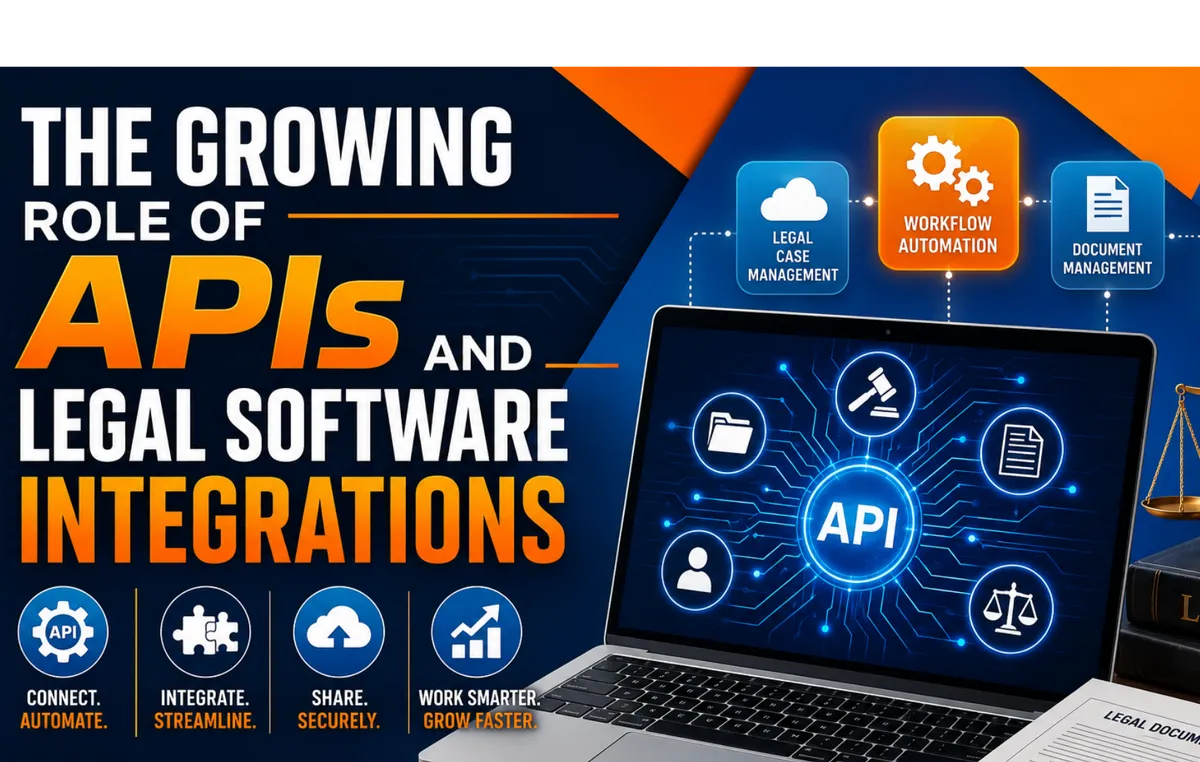
APIs and Legal Software Integrations: How Connected Technology Is Transforming Legal Workflows
Technology is reshaping how law firms, legal departments, litigation support providers, and process serving companies manage their work. As legal organizations adopt more specialized software, one challenge has become increasingly important: getting different systems to communicate efficiently.
That is where APIs in the legal industry play a critical role.
Application Programming Interfaces (APIs) allow software platforms to exchange information automatically and securely. Instead of employees repeatedly entering the same case information into multiple systems, APIs can move data between applications, trigger workflows, update records, and provide real-time information.
Combined with modern legal software integrations, APIs can reduce administrative work, improve data accuracy, accelerate case processing, and create a more connected experience for attorneys, process servers, staff, and clients.
What Is an API in Legal Technology?
An Application Programming Interface (API) is a defined way for one software application to communicate with another.
Think of an API as a secure digital bridge between two systems. One application sends a request, another application processes that request, and information is exchanged according to predefined rules and permissions.
For example, imagine a law firm creates a new service-of-process assignment in its case management platform. With the right integration, an API could automatically transmit relevant case details and documents to process server software.
The process serving platform could then send status information back to the law firm's system as the assignment progresses.
Instead of manually copying information between platforms, authorized data can move automatically.
This creates a more efficient legal technology workflow while reducing duplicate data entry.
Why Legal Software Integrations Matter
Most legal organizations no longer rely on a single software platform. A law firm or legal support provider may use multiple systems for different functions, including:
Case and matter management
Process serving
Customer relationship management (CRM)
Billing and accounting
Document management
Electronic signatures
Calendaring and scheduling
Cloud storage
Electronic court filing
Client communication
Reporting and analytics
When these systems operate independently, employees may have to transfer information manually.
For example, staff might receive an update from a process server, enter it into a case management system, notify the attorney, update a client portal, and later enter related information into billing software.
That fragmented workflow consumes time and creates opportunities for mistakes.
Integrated legal platforms can connect these processes so information entered or updated in one authorized system can automatically trigger appropriate actions elsewhere.
Key Benefits of APIs for Law Firms
The benefits of APIs for lawyers and law firms extend beyond technical convenience. Effective integrations can directly improve day-to-day legal operations.
1. Reduced Manual Data Entry
One of the clearest benefits is eliminating repetitive administrative work.
Instead of entering client names, case numbers, addresses, deadlines, and assignment details into several applications, information can be entered once and transmitted to connected systems.
Reducing duplicate entry saves staff time and can lower the risk of inconsistent records.
2. Improved Data Accuracy
Manual data entry creates opportunities for mistakes, particularly when staff members are working quickly or handling large caseloads.
Automated data synchronization can help maintain consistent information across approved systems.
Accurate information is especially important in legal work, where incorrect addresses, case numbers, party names, or dates can cause significant complications.
3. Faster Case Processing
APIs can move assignments, documents, status updates, invoices, and other information between platforms without waiting for manual processing.
This can shorten administrative cycle times and help legal teams respond more quickly to developments.
4. Better Client Communication
Modern clients increasingly expect timely information about their matters.
When systems are properly integrated, status changes can trigger notifications, dashboard updates, or other authorized communications.
Attorneys and clients gain greater visibility without relying exclusively on emails and phone calls for routine status checks.
5. Increased Staff Productivity
Automating repetitive tasks allows attorneys, paralegals, legal assistants, dispatchers, and administrative staff to spend more time on work requiring professional judgment and human attention.
The objective is not simply automation for its own sake. Effective integration removes unnecessary administrative friction from the legal workflow.
Legal Process Automation Through APIs
One of the most powerful applications of APIs is legal process automation.
APIs can connect events across different systems so that one action automatically triggers another.
Depending on the software involved, automated legal workflows might include:
Creating service-of-process requests
Transferring case documents
Assigning jobs to process servers
Updating service status
Recording service attempts
Sending authorized client notifications
Delivering completed proofs or affidavits
Generating invoices
Synchronizing billing information
Updating digital case files
Creating reports and dashboard updates
Consider a service-of-process assignment.
A law firm's case management system could transmit the assignment to a process serving platform. The process server could document attempts through a mobile application. Those updates could then flow back to the firm's system, reducing the need for staff to request and manually record each update.
The result is a more connected workflow from assignment through completion.
How APIs Are Transforming Process Serving
The growth of process serving technology provides a strong example of how integrations can improve legal support operations.
Process serving historically depended heavily on phone calls, emails, spreadsheets, paper documents, and manual status reporting. Modern platforms can centralize much of that activity.
API-enabled process server software may support workflows such as:
Receiving new assignments
Importing service documents
Dispatching jobs to field servers
Recording timestamps and attempt details
Capturing GPS-related service data
Uploading photographs and documentation
Updating assignment status
Generating proofs or affidavits of service
Delivering completed documents
Synchronizing billing records
Providing client-facing status updates
The specific capabilities depend on the software and integration being used, but the broader goal is consistent: reduce administrative friction while increasing visibility.
Connecting Law Firms and Process Servers
Communication between law firms and process servers has traditionally relied on email, phone calls, and manual status requests.
Legal software integrations can create a more direct connection.
Instead of asking, "What happened with this serve?" authorized users may be able to view current assignment information through their existing software or a connected client portal.
Depending on the platform, law firms may be able to:
Monitor active assignments
Review service attempts
View timestamps and supporting documentation
Access photographs or field notes
Receive completed proofs of service
Download digital case records
Review assignment history
Generate operational reports
This type of visibility can be particularly valuable for litigation teams managing large volumes of assignments.
It also allows process serving companies to spend less time answering routine status inquiries and more time completing assignments.
APIs and Document Automation
Document preparation is another area where APIs can create substantial efficiency.
Many legal documents rely on information that already exists elsewhere in the organization's systems. Re-entering that information manually is inefficient and can introduce inconsistencies.
Legal document automation can use existing case data to populate standardized documents and forms.
Depending on the workflow, examples may include:
Proofs of service
Affidavits of service
Client status reports
Internal case summaries
Billing documents
Invoices
Filing-related documents
Assignment reports
Automated document generation does not eliminate the need for review. Legal organizations should still verify that generated documents are accurate and satisfy applicable court rules and jurisdictional requirements.
However, automation can significantly reduce the repetitive work involved in preparing routine documents.
Technology Solutions for Modern Process Servers
Modern software for process servers increasingly combines field operations with office management and client communication.
Common capabilities may include:
Mobile assignment management
GPS-enabled attempt documentation
Digital proofs and affidavits
Secure document storage
Route planning and optimization
Real-time status reporting
Electronic document delivery
Mobile photo documentation
Automated client notifications
Billing integrations
Reporting dashboards
API connectivity
For process serving companies, technology can become more than an internal productivity tool. It can also become a competitive differentiator.
Law firms increasingly value providers that can deliver reliable service while giving them clear visibility into assignment status, documentation, and turnaround times.
API Security and Data Protection in the Legal Industry
Greater connectivity also creates greater responsibility.
Legal organizations routinely handle confidential and sensitive information. Connecting multiple applications means organizations must carefully evaluate how information is authenticated, transmitted, stored, and accessed.
When considering legal technology solutions and API integrations, important security features may include:
Encryption during data transmission
Strong authentication controls
Role-based access permissions
Multi-factor authentication where appropriate
Detailed audit logs
Secure credential and API key management
Regular security updates
Data backup and recovery procedures
Secure cloud infrastructure
Vendor security assessments
Compliance with applicable privacy and data-protection requirements
Organizations should also consider what information actually needs to move between systems.
A well-designed integration should follow the principle of least privilege, providing users and applications only the access necessary to perform their authorized functions.
Common Challenges of Legal Software Integration
Although APIs can provide significant operational benefits, implementation requires planning.
System Compatibility
Not every legal application offers the same integration capabilities. Some platforms provide comprehensive APIs, while others offer limited connections or rely on third-party integration tools.
Organizations should evaluate compatibility before committing to a new system.
Data Security
Connecting systems can create additional access points that must be protected.
Legal organizations should assess vendor security practices, authentication methods, permissions, data handling, and incident-response procedures.
Data Quality
Automation works best when the underlying information is accurate and consistently formatted.
If incorrect or incomplete data enters an automated workflow, integrations may distribute those errors across multiple systems.
Staff Training
Technology only creates value when employees understand how to use it effectively.
Staff should understand new workflows, responsibilities, exception-handling procedures, and what to do when an automated process fails.
Implementation Costs
API development, configuration, testing, migration, and training may require an upfront investment.
Organizations should evaluate the total cost of ownership against potential benefits such as reduced administrative labor, faster processing, improved reporting, and fewer errors.
Vendor Dependence
Organizations should also consider what happens if a software provider changes its API, pricing structure, integration policies, or product roadmap.
Choosing established platforms with clear documentation and reliable technical support can reduce this risk.
How to Choose Legal Software With API Capabilities
When evaluating law firm software solutions, organizations should look beyond individual features and consider how each platform fits within their broader technology ecosystem.
Important questions include:
Does the platform provide an API?
What systems can it integrate with?
Is API documentation available?
How is authentication handled?
What data can be exchanged?
Are integrations available in real time or through scheduled synchronization?
Does the platform maintain detailed audit logs?
What security standards does the vendor follow?
Can permissions be customized?
How reliable is technical support?
Can the platform scale with increasing case volume?
What happens if an integration fails?
Can data be exported if the organization changes providers?
A platform that meets today's requirements but cannot communicate with future systems may eventually become a bottleneck.
Choosing flexible, integration-friendly technology gives organizations more options as their operations grow.
APIs, AI, and the Future of Legal Technology
The future of legal technology integration will likely involve increasingly connected systems.
Artificial intelligence, cloud computing, workflow automation, analytics, document generation, and API connectivity can work together to create more intelligent legal workflows.
For example, future integrated systems may help legal teams identify stalled assignments, flag approaching deadlines, categorize documents, detect missing information, generate routine reports, or recommend the next administrative action.
APIs are particularly important in this environment because AI and automation tools are most useful when they can securely access the appropriate information from authorized systems.
Rather than operating as isolated applications, legal technology is moving toward interconnected ecosystems where information can flow between specialized tools.
Why API Integration Can Become a Competitive Advantage
For law firms, integrations can improve efficiency and help attorneys deliver more responsive client service.
For process serving and litigation support companies, integration capabilities can also influence which providers law firms choose.
A legal client managing hundreds or thousands of assignments may prefer a provider that can connect directly with its existing technology rather than requiring staff to manually transfer information between platforms.
That makes API integration for process serving more than an IT feature. It can become part of the overall client experience.
Providers that offer reliable integrations, transparent reporting, secure information exchange, and automated status updates may be better positioned to serve technology-driven legal organizations.
Frequently Asked Questions About APIs in the Legal Industry
What is an API in legal technology?
An API, or Application Programming Interface, allows different software systems to communicate and exchange authorized information. In legal technology, APIs can connect case management, process serving, billing, document management, and other platforms.
How do APIs benefit law firms?
APIs can reduce duplicate data entry, improve information accuracy, accelerate workflows, automate routine tasks, and provide faster access to case and assignment updates.
How are APIs used in process serving?
APIs can connect law firms with process serving software to transmit assignments, documents, service attempts, status updates, supporting documentation, completed proofs of service, and billing information.
Are legal software integrations secure?
They can be, provided the integrations are designed and managed with appropriate security controls. Organizations should evaluate encryption, authentication, permissions, audit logging, vendor security practices, and applicable privacy requirements.
What is legal process automation?
Legal process automation uses technology to perform routine administrative tasks with limited manual intervention. APIs often enable this automation by allowing information and workflow events to move between different applications.
Should law firms choose software with API access?
API capabilities are increasingly valuable for firms using multiple technology platforms. Even if a firm does not need extensive integrations today, choosing software with flexible integration options may provide greater scalability in the future.
Conclusion: Building a More Connected Legal Workflow
The growing role of APIs in the legal industry reflects a broader transformation in how legal organizations operate.
Through legal software integrations, law firms, legal departments, process servers, and litigation support providers can connect previously isolated systems, reduce repetitive administrative work, improve data accuracy, accelerate case processing, and provide greater visibility to clients.
For process serving companies in particular, integration capabilities can strengthen relationships with law firms by making assignments easier to submit, track, document, and manage.
As legal technology continues to evolve, the strongest digital strategies will not simply involve adopting more software. They will involve creating secure, connected systems in which the right information can move efficiently between the right applications.
Organizations that invest in scalable APIs, thoughtful automation, strong cybersecurity, and flexible legal technology solutions will be better positioned to improve productivity and compete in an increasingly connected legal marketplace.
Stay sharp. Stay informed. Live Mighty!
Read the full article at www.mightyprocessserver.com
This article is published by Process Server Daily, powered by MightyAutomation.ai, the leader in legal support intelligence.