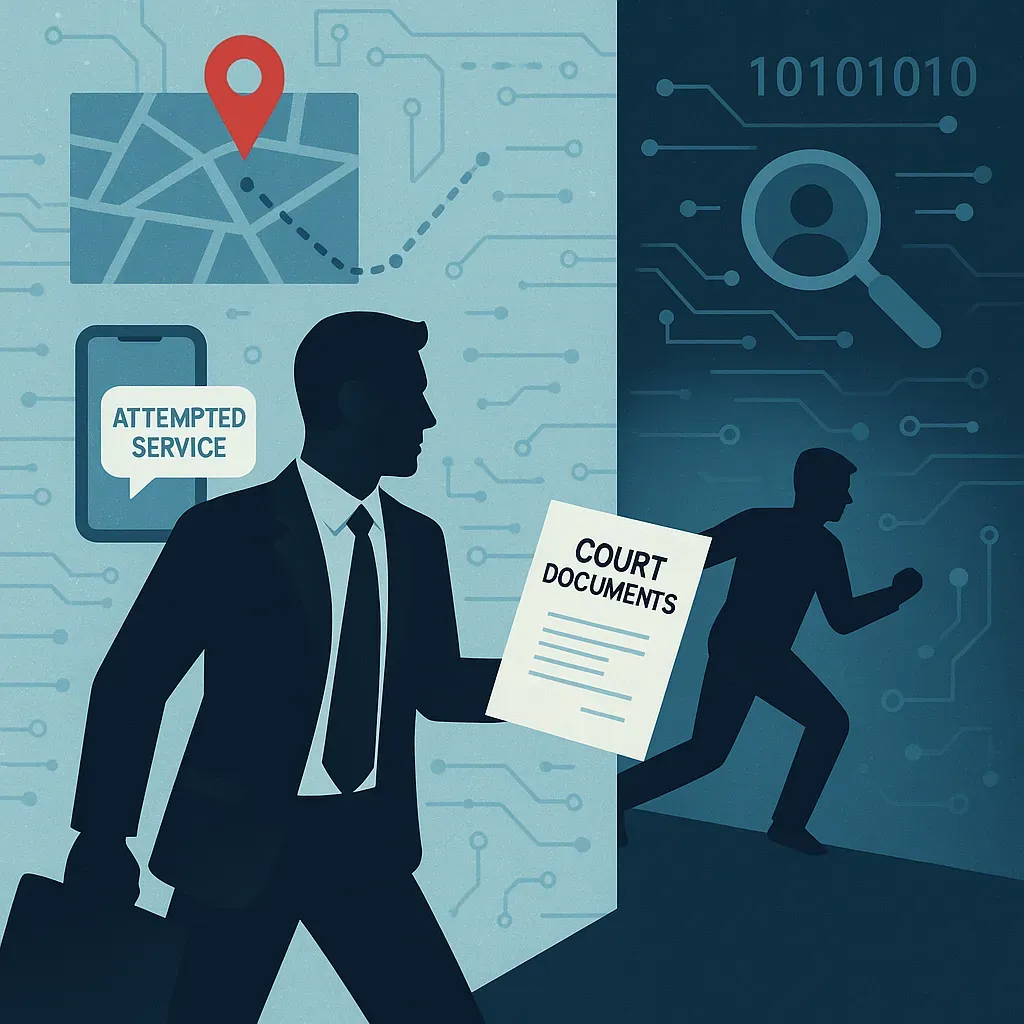
Serving Evasive Defendants: Practical Tactics, Timing, and Documentation
Article version in Mike's voice for Process Server Daily. Not legal advice.
Some defendants will open the door. Others will do everything they can to make sure you never get that chance. Evasive service is part of the job. It always has been. What changes is how carefully you find them, time the attempts, stay inside the law, and write notes a court can trust.
I built my company in Northern California, in Redding. At my busiest I was doing 30 or 40 serves a day. Volume teaches you something flashy "2026 tactics" articles often skip. Most hard serves are not solved by a clever trick. They are solved by good information, varied attempt times, lawful observation from places you are allowed to be, and documentation that shows you actually tried. Pressure and confrontation rarely help. Patience and a clean record usually do.
This is not legal advice. Service rules, surveillance limits, and alternative service options vary by state and by case. Check the rules that apply where you are working, and clarify legal questions with the handling attorney.
Why people evade service
Before you plan the next attempt, it helps to understand why someone is ducking you. Motivation does not excuse bad behavior. It does help you predict patterns.
Common reasons include:
Fear-based avoidance, especially in restraining order, domestic, or other high-emotion cases
Financial avoidance on debt, eviction, or collection work
Strategic delay by someone who understands the system and wants time
Past experience with being served, so they recognize the pattern and shut it down early
Fear cases call for extra calm and extra safety awareness. Financial avoidance often looks like empty houses during business hours and sudden "nobody home" stories from neighbors who know better. Strategic delay can look polished: short answers, careful schedules, and just enough presence to live there without answering the door. People who have been served before may watch for unmarked cars, note your return times, or leave through a side exit when they see someone walking up.
Recognizing the category helps you plan. It does not give you permission to break privacy rules, trespass, or invent a story to get someone to the door.
Finding them without guessing
Skip tracing, for a process server, means verifying where someone likely lives, works, or regularly appears so you can attempt service legally. It is not a license to run a full private investigation. If the work starts looking like deep investigation beyond service of process, know your state's rules. Some states require a PI license for certain investigative work. Stay in the process-server lane unless you are properly licensed for more.
In practice, good locate work is multi-source verification. One database hit is a lead. It is not proof.
Useful cross-checks often include:
Public social activity that shows posting times, check-ins, marketplace listings, or other open clues about when someone is around
Property and residence clues: who appears connected to the address, vehicles that match descriptions, neighbor confirmation that the person lives there, ordinary delivery patterns you can observe from a lawful place
Overlapping database or records sources that point to the same address, employment, vehicle, or known associates
Pattern recognition: work schedules, gym or school drop-off rhythms, weekend habits, and the times the house actually shows life
The goal is not to invent a biography. The goal is to answer practical questions. Is this the right address? When is the person most likely there? Are there other lawful places to attempt, such as employment, if the papers and local rules allow it?
Use public information carefully. Do not use deception to get access, do not hack anything, and do not treat private or restricted data as fair game just because a job is hard. If a lead is thin, say so to the client instead of burning attempts at a bad address.
Timing is half the serve
A surprising number of "evasive" defendants are really just people you keep missing at the wrong hour.
Windows that often work better than midday weekday loops:
Early morning, roughly 5:30 to 8:30, when people leave for work
Evenings, roughly 6:00 to 10:00, when people are more likely home
Weekends, when routines can be more predictable
Shift-based timing for night workers who sleep through normal attempt hours
Lunch-hour attempts when employment service is allowed and appropriate
Vary the times. Three attempts at 2:00 p.m. on weekdays do not prove diligence. They prove you like afternoons. Courts and attorneys notice when your log shows different days, different hours, and a real effort to catch the person in their actual rhythm.
Watch the neighborhood while you are there lawfully. Property layout, parking patterns, which lights come on, which cars belong, and what neighbors say can tell you whether someone is actively avoiding service or simply never home when you arrive. Keep those notes factual. "Neighbor said subject lives there and usually gets home after 7" is useful. Guesswork dressed up as certainty is not.
Lawful observation and stakeouts
Observation from a public place can be part of serving evasive defendants. Trespassing, harassment, peeking into windows, and anything that violates state privacy rules is not.
Stay legal:
Know your state's rules on surveillance and recording
Stay off private property you are not invited onto
Respect privacy restrictions that apply where you work
Keep your notes clean enough that you would not mind a judge reading them
Stakeout best practices are mostly common sense. Use an unmarked vehicle and a neutral position. Choose a spot where you can see what you need without drawing attention. Keep technology quiet and non-intrusive. Log what you actually observe: vehicles arriving or leaving, lights, door activity, people matching the description, and the times those things happened.
You are looking for a pattern of life you can use for the next attempt, not for drama. Morning versus evening activity, work routines, package and mail patterns visible from a lawful vantage point, and visitor schedules can all matter. Learning the rhythm is often more valuable than sitting longer in the wrong window.
If observation starts turning into something that feels like a PI operation, stop and check licensing and the client's instructions. Process serving and private investigation are related fields. They are not the same job.
Documentation courts actually trust
When personal service fails, your notes are what support the next move. Vague affidavits create problems. Clear, dated, factual records help attorneys ask for alternative service and protect you if the service is challenged.
Strong documentation usually includes:
Timestamped attempt logs with dates, times, and addresses
Location support such as GPS notes where you use them
Observable activity: lights, vehicles, voices, doors opening, people seen
Descriptions of the property, vehicles, and anyone encountered
Neutral, fact-based writing with no insults and no speculation dressed up as fact
Photos where they are allowed and appropriate
Write like someone who expects cross-examination. "Knocked. No answer. Blue sedan matching description in driveway. Interior lights visible at 7:14 p.m." beats "Subject clearly home and hiding." The first is observation. The second is a conclusion you may not be able to prove.
Clean documentation strengthens motions for alternative service, protects you legally, and builds trust with attorney clients. Thin notes do the opposite. If you use software to keep jobs, attempt notes, and affidavits together, use it as a memory aid after a long day, not as a substitute for being accurate in the field.
Mighty Process Server is built around that kind of workflow: jobs, attempt records, and affidavits tied to the work. If you're a process server organizing your own jobs, you can create a free account with up to 25 free jobs every month. You never have to upgrade to a paid plan. Use what helps. The reputation still comes from honest field notes.
Safety comes first
People avoiding service can become unpredictable. Your job is to serve papers, not to win an argument on a porch.
Watch for red flags:
Cameras or attention suddenly focused on you
Blinds slamming shut or lights cutting off the moment you arrive
Aggressive statements from occupants
Suspicious vehicle movement that feels aimed at you
Any situation where your gut says the scene is turning unsafe
De-escalate. Stay calm. Keep distance. Do not block paths, trap people, or "call out" evasive behavior in a way that heats things up. Avoid arguing about whether they are ducking service. If the situation feels unsafe, disengage and leave. Report what happened factually to the client. No serve is worth an injury.
When to ask for alternative service
Sometimes personal service is not going to happen no matter how clean your process is. That is when thorough diligence becomes the product.
Signs it may be time to shift strategies:
Repeated avoidance across varied days and times
Doors opening with people who will not identify themselves
Vehicles leaving as you pull up, over and over
Neighbors confirming the person lives there but will not come to the door
Preparing for alternative service usually means a detailed affidavit of due diligence, proof of multiple varied attempts, and evidence that supports intentional evasion or at least that personal service could not reasonably be completed. What counts as enough diligence depends on the jurisdiction and the case. There is no magic universal number of knocks.
Alternative methods also vary by state. They can include posting, certified mail, email or other permitted electronic methods where allowed, and substituted service on a competent household member when the rules permit it. Do not invent a method because it sounds modern. Follow what the court and the handling attorney say is available for that case.
Your role is to document reasonable diligence so counsel can ask for the next lawful step. Guessing the remedy yourself is how servers get out over their skis.
What I would do on a hard evade
If I picked up a stubborn evade tomorrow, I would keep it simple.
Verify the address and any alternate places of service with more than one source.
Plan varied attempt windows instead of repeating the same afternoon slot.
Observe only from lawful places and log what I see without editorializing.
Keep the client updated early if the address looks wrong or the person appears to be actively avoiding.
Protect safety first and walk away when needed.
When personal service stalls, hand the attorney a due diligence record that can support alternative service under the local rules.
That is the job. Not theater. Not a chase scene. Not a lecture on the porch.
FAQ
Can someone legally avoid being served?
They can try. Intentionally ducking service does not always stop a case from moving forward. Courts may authorize alternative service when reasonable diligence is documented under the applicable rules. That is a legal question for the attorney and the court, not a street argument for the server.
How many attempts are required before alternative service?
There is no universal number. Courts look at whether the plaintiff exercised reasonable diligence under state rules. Varied times, days, and factual notes matter more than hitting a made-up attempt quota.
Can a process server use social media?
Publicly available information may help you locate someone or choose better attempt times. Avoid deceptive practices. Comply with privacy laws that apply where you work. Public clues are tools. Impersonation and tricks are not a how-to.
Is surveillance legal for process servers?
Observation from lawful public locations is generally treated differently from trespassing, harassment, or violating state privacy laws. Those last ones are problems. Know your local rules before you sit on a house, and stay where you are allowed to be.
What is a due diligence affidavit?
It is a sworn record of the dates, times, locations, and observations from your service attempts. Attorneys use it to support requests for alternative service when personal service cannot be completed. The stronger and more factual it is, the more useful it is.
Need a server?
If you need coverage on a hard-to-serve defendant, start with the Mighty Process Server directory. Talk through instructions, attempt windows, and how you want updates before the job starts.
If you're a process server dealing with evasive work and want a cleaner way to track jobs, attempt notes, and affidavits, you can create a free Mighty Process Server account with up to 25 free jobs every month. You never have to upgrade to a paid plan. Use what helps you stay organized.
Evasive defendants reward the servers who stay patient, legal, and honest on paper. Good information, smart timing, lawful observation, and notes a court can trust will take you farther than pressure ever will.
Process Server Daily / mightyautomation.com. Not legal advice. Service requirements, surveillance limits, and permitted alternative service methods vary by jurisdiction and case. Check the applicable rules and clarify legal questions with the handling attorney.
Be safe out there.
Stay sharp. Stay informed. Live Mighty!
Read the full article at www.mightyprocessserver.com
This article is published by Process Server Daily, powered by MightyAutomation.ai, the leader in legal support intelligence.