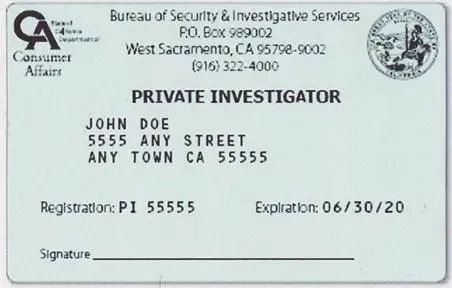
Private Investigator Legislation: What Process Servers Should Watch in 2026
Article version in Mike's voice for Process Server Daily. Not legal advice.
I'm a process server, not a private investigator. But when somebody needs to be located before papers can be served, those two businesses can end up working on the same assignment. That makes PI rules worth paying attention to, even if investigation work is not what you sell.
My process serving roots are in Northern California, in Redding. The job is still the job: get the papers served lawfully, document what happened, and communicate with the client. Sometimes the next responsible step is bringing in a properly licensed investigator, not deciding that a difficult address gives me permission to become one.
Three developments are worth separating here. California has a narrow equipment proposal. South Carolina has a confidentiality and conflicts proposal. Oregon provides a reminder about continuing licensing standards. They are not one national rule, and proposed legislation is not enacted law.
First, separate a bill from a rule you actually have to follow
As checked on November 5, 2026, California AB 2049 and South Carolina H.3269 remain proposals with committee referrals shown in the sources linked below. I would not tell a client that either bill has passed. I would not build a new service around an assumption that either one will pass, either.
That distinction matters when an article gets forwarded without its date. Somebody reads a headline about new requirements, repeats it in a group, and pretty soon a proposal is being treated like a rule that took effect yesterday.
My approach is to look for the actual language, the latest recorded action, and, if legislation is enacted, its effective date. Then I ask who it covers. A bill title can mention several industries while the operative section applies to a much narrower group.
Watching legislation is useful. Getting ahead of the facts is not.
California AB 2049 is narrower than the headline sounds
Assemblymember Juan Alanis introduced AB 2049 on February 17, 2026. It was amended March 16 and re-referred to the Assembly Business and Professions Committee on March 17. The tracker reviewed for this article still shows it in committee, not enacted.
The title is “Private security services and private investigators: BB devices.” Read that title by itself and you might think California is creating a new equipment rule for every private investigator. That is not what the operative text says.
The proposed Business and Professions Code section 7583.45.5 addresses a person employed by a private patrol operator licensed under the Private Security Services Act. It would prohibit that employee from carrying or using a specified BB device unless the employee completed the training described in section 643 of Title 16 of the California Code of Regulations.
The proposal defines the covered device closely. It has a safety catch or switch, fires a nonmetal round projectile of .51 or .68 caliber weighing under 3.5 grams, and has a maximum velocity of 350 feet per second. It also has capacity for at least five rounds and can fire at least five rounds with one CO2 cartridge.
I include those details because this is not a blanket statement about everything someone might call a BB device. It is also not a new rule already imposed on every PI or process server.
For my readers, the takeaway is restraint. Do not turn a proposed equipment provision into a recommendation to carry something on a serve. This article is not equipment advice. Existing laws, licensing restrictions, training requirements, and employer policies still need their own review. A proposal about one category of private security employee does not authorize anything for the rest of us.
South Carolina H.3269 puts the focus on client information
South Carolina's proposal is closer to the everyday handoff between a process server, an investigator, and a law firm.
Representatives Rutherford and Spann-Wilder sponsored H.3269. It was prefiled December 5, 2024, introduced in the House January 14, 2025, and referred to the House Labor, Commerce and Industry Committee. The official history reviewed for this article shows no later action. Treat it as proposed, not enacted.
The bill would add section 40-18-75. In general, a private investigator or member of the investigation business could not reveal information relating to a client's representation without informed consent, implied authorization to carry out the representation, or an identified exception.
Those exceptions include preventing a client's criminal act, preventing reasonably certain death or substantial bodily harm, getting legal advice about compliance, establishing certain claims or defenses, and complying with law or a court order. The actual text defines the circumstances. I would not reduce it to “confidential unless you have a good reason.”
There is a conflicts piece, too. The proposal would restrict knowingly representing interests materially adverse to a current or former client without the required informed consent. It would also restrict using representation information to disadvantage a current or former client, subject to the bill's exceptions, including information becoming generally known.
For representations that violate the section, the proposal calls for reimbursement of payments made by affected current and former clients, in addition to other applicable penalties.
That does not make every PI conversation attorney-client privileged. Confidentiality duties and legal privilege are different questions. If a client needs an answer about privilege, that belongs with qualified counsel, not a promise from me.
Oregon reminds me that a license is an ongoing responsibility
Oregon licenses private investigators through the Department of Public Safety Standards and Training, or DPSST. Its moral fitness rules address character, honesty, striving for justice, public trust, and respect for laws under OAR 259-061-0040 and 259-061-0300.
A February 17, 2026 Private Investigator Subcommittee review illustrates why renewal should not be treated as automatic. The renewal application raised concerns involving arrests and underlying conduct related to physical contact, assaultive behavior, public alarm, and intoxication. Court obligations had been completed. The subcommittee nevertheless unanimously recommended denial.
I'm leaving the applicant's name out because the useful lesson is about professional responsibility, not turning somebody's licensing record into a story about them. A subcommittee recommendation is also not the same thing as a final agency order.
For a process server hiring an investigator, the practical point is to check current licensing status with the appropriate regulator. An old business card or a license number on a website is a starting point, not confirmation that the person is currently authorized for the work you need.
For anyone who holds a license, meeting continuing requirements deserves attention throughout the year. Renewal is not just an invoice.
Stay in your lane when an address turns into an investigation
A client does not always separate services neatly. They may say, “Find this person and serve them,” as if that describes one task with one set of rules.
I need to separate the assignment before accepting it. What is ordinary preparation for lawful service in that jurisdiction? What is regulated investigation work? What authority, license, or exemption applies? Those answers vary, and a process server title does not answer them.
Investigation work often requires a PI license. Calling it skip work, research, or an add-on does not settle the licensing question. Access to a database does not settle it either.
If the request expands into an investigation outside my authority, I refer it to a properly licensed professional or get qualified guidance before proceeding. I do not offer surveillance tactics, unauthorized access, or ways around privacy restrictions as a solution to a difficult serve.
The referral should be just as clear to the customer. Explain who is doing the investigation, what the approved scope is, and how the process serving assignment resumes when lawful locate information is available. Clear boundaries protect the client as well as the people doing the work.
A file handoff should have a purpose, not just an attachment
Even without treating H.3269 as law, I can take a practical lesson from it: know what you are sharing and why.
Suppose I have unsuccessful attempts at an address and the client authorizes help from a licensed investigator. The investigator may need the subject's identifying information, the address provided, and my factual attempt notes. That does not mean every unrelated document in the client's file belongs in the handoff.
Before sending information, I want the assignment and authorized recipient clear. Who hired the investigator? What work is authorized? Who should receive the result? Does the client or attorney need to approve the disclosure? If I cannot answer those questions, I pause and ask.
I also want to separate facts from guesses. “No answer at the door at the recorded time” is not the same as “the subject moved.” Passing along a conclusion I cannot support can send the next professional in the wrong direction.
Use an appropriate, access-controlled way to transfer sensitive material. Confirm the recipient instead of trusting an old email autocomplete. Agree on handling and retention expectations, including any legal obligation to preserve records. Those are sensible working habits, not a claim that one procedure satisfies every state's law.
Build a small review habit, not a panic response
I would rather make a few careful checks than announce that the whole industry has changed because three items appeared in a news article.
For a PI partnership, my basic review is straightforward:
Confirm current licensing and the authority needed for the specific assignment.
Put scope, client authorization, and reporting responsibilities in writing.
Share relevant information with the right person through an appropriate channel.
Keep factual records and revisit applicable requirements when the work changes.
If a bill becomes law, then review the final language and effective date with the people responsible for compliance. Until then, track it accurately. For existing licensing rules, do not wait for another headline before checking your own responsibilities.
Good professional relationships make it easier to say, “That part needs an investigator.” I see that as knowing the job, not losing the job.
Frequently asked questions
Are California AB 2049 and South Carolina H.3269 law yet?
Not according to the sources reviewed November 5, 2026. Both show committee referrals rather than enactment. Check the current legislative record before relying on either proposal, especially if you are reading this later.
Does AB 2049 cover every private investigator?
The operative text reviewed addresses employees of licensed private patrol operators and a specifically described BB device. The title mentions private investigators, but that does not justify saying every PI is covered. It is proposed legislation, not blanket permission or an enacted training mandate for all investigators.
Do these proposals automatically change my process serving work?
No. Coverage depends on the actual law, your role, and the jurisdiction. They are worth monitoring if you partner with investigators or also hold another license. Your existing process serving, privacy, and licensing obligations remain separate questions.
What should I send a PI who is helping locate someone?
Start with a clear, authorized assignment and relevant, accurate information. Confirm who may receive it and how it should be transferred. Do not forward the entire client file by default. Ask the client or attorney when disclosure authority is unclear.
Can I just add investigation services to my process serving business?
Not without checking the applicable requirements. Investigation work often requires a PI license, and exemptions vary. I would resolve that before advertising the service or taking payment, not after the customer asks how the information was obtained.
Need a server?
If you need a process server, start at Mighty Process Server. Be clear about where the papers need to go, your deadline, and whether you already have a usable address. If investigation help is needed, discuss that separately with the right professional.
If you are a process server, you can create a free MPS account with up to 25 free jobs every month, with no requirement to ever upgrade to a paid plan. Start with work you are authorized to do, communicate clearly, and build from there.
Sources and status checked November 5, 2026: California AB 2049 text and history; South Carolina H.3269 official text and history; Oregon DPSST committee minutes documenting the February subcommittee review.
Process Server Daily | Mighty Mike Reid | mightyautomation.com. General information only, not legal advice. Licensing, privacy, equipment, and process serving requirements vary by jurisdiction. Consult the applicable regulator and qualified legal counsel about your situation.
Be safe out there.
Stay sharp. Stay informed. Live Mighty!
Read the full article at www.mightyprocessserver.com
This article is published by Process Server Daily, powered by MightyAutomation.ai, the leader in legal support intelligence.