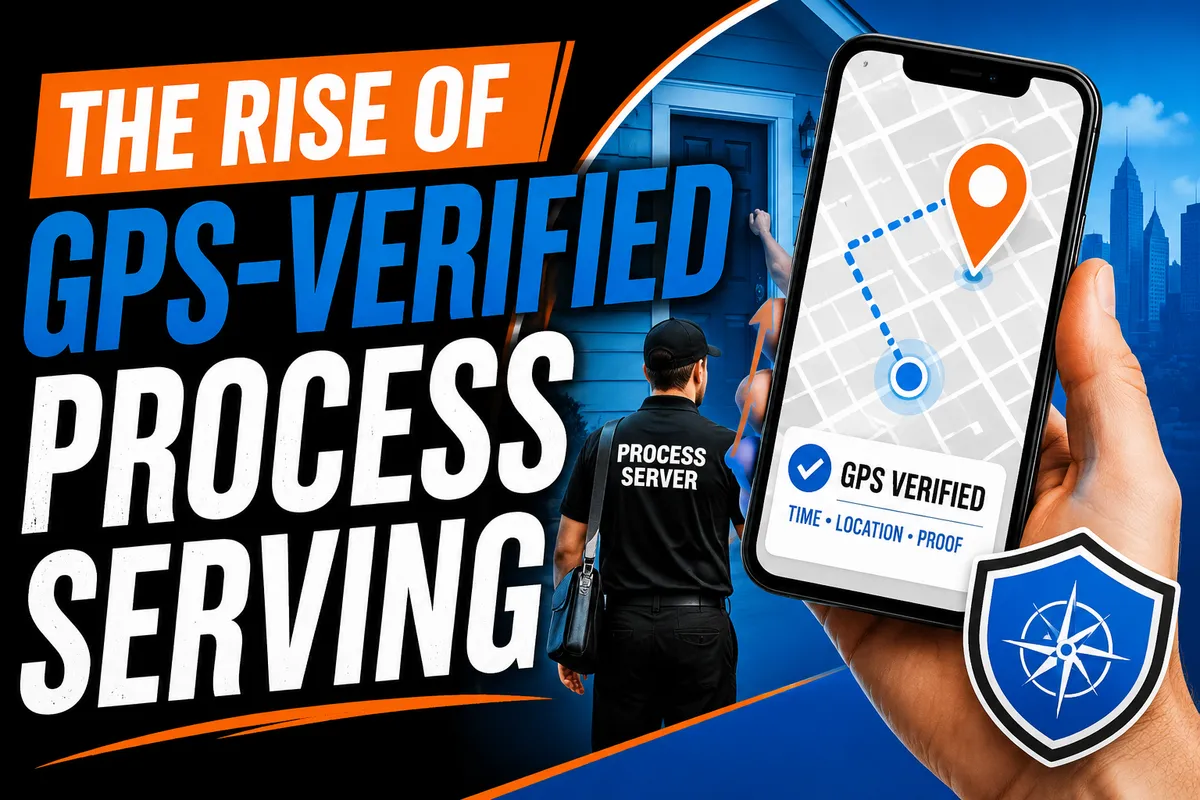
GPS-Verified Process Serving: How Technology Is Transforming Legal Document Delivery
Speed, accuracy, and accountability are increasingly important in modern legal case management. Attorneys and law firms need to know not only whether legal documents were served, but also when and where each service attempt occurred.
That demand has helped drive the adoption of GPS-verified process serving. By combining professional process servers with GPS-enabled mobile technology, process serving companies can create more detailed records of service attempts, provide faster status updates, and improve transparency throughout the legal document delivery process.
For law firms, businesses, and legal professionals, GPS verification offers another layer of documentation that can support efficient case management and help reduce uncertainty surrounding service attempts.
This article is presented by MPS, a provider of professional process serving and legal support solutions.
What Is GPS-Verified Process Serving?
GPS-verified process serving is a method of documenting service attempts using location data captured by a GPS-enabled device or process serving application.
When a process server arrives at an address, the technology may record information such as:
GPS coordinates
Date and time of the attempt
Address or service location
Attempt or service status
Digital field notes
Photographs, when lawful and appropriate
Other assignment-specific documentation
These digital records supplement traditional documentation, such as affidavits or proofs of service.
GPS verification does not determine whether service is legally valid on its own. The process server must still follow applicable statutes, court rules, client instructions, and jurisdiction-specific requirements. Instead, GPS data provides an additional record showing where and when an attempt was documented.
Why GPS Verification Is Changing Process Serving
Historically, process servers relied heavily on handwritten field notes, paper logs, telephone updates, and completed affidavits. Those methods remain important, but modern legal teams increasingly expect faster and more detailed reporting.
Mobile technology has changed that workflow.
Today's process server technology can allow field professionals to record attempts immediately, while office staff and clients receive updated information through centralized case management systems or secure client portals.
This shift can help answer common questions more quickly:
Has service been attempted?
When did the server visit the address?
Was the server at the assigned location?
What happened during the attempt?
Does another attempt need to be scheduled?
The result is a more transparent workflow from assignment through completion.
How GPS-Verified Process Serving Works
The exact workflow varies by provider and software platform, but GPS verification generally follows several steps.
1. The Assignment Is Dispatched
Legal documents and service instructions are assigned to a professional process server through a case management or dispatch system.
2. The Process Server Travels to the Location
The server visits the address listed in the assignment while following applicable service requirements and client instructions.
3. GPS Data Is Captured
At or near the time of the service attempt, a GPS-enabled application records the device's location.
Depending on the platform, the record may also include a timestamp and other relevant assignment data.
4. The Attempt Is Documented
The process server records what occurred, including whether service was completed, whether the subject appeared to have moved, whether another attempt may be appropriate, or other relevant observations.
5. The Client Receives an Update
When integrated with a case management platform, the information can be transmitted to office staff or made available to authorized clients.
This creates a more efficient process than relying exclusively on manual updates after a server completes a route.
Key Benefits of GPS-Verified Process Serving
More Accurate Service Documentation
One of the most important benefits of GPS process serving is improved documentation.
GPS data can provide an additional location record associated with a service attempt. When combined with timestamps, field notes, photographs where appropriate, and a properly completed proof of service, it can create a more comprehensive record of the assignment.
Greater Accountability and Transparency
Law firms frequently manage dozens, hundreds, or even thousands of active matters. Tracking each service assignment manually can become difficult.
GPS-enabled reporting gives authorized users greater visibility into the status of assignments and helps process serving companies maintain consistent records across their field operations.
Faster Status Updates
Clients no longer necessarily need to wait until the end of the day for a process server to return paperwork or call the office.
With real-time process serving updates, attempt information can often be entered shortly after an event occurs, helping attorneys make faster decisions about subsequent attempts, alternative addresses, skip tracing, or other next steps.
More Efficient Field Operations
GPS-enabled platforms may also support route planning and assignment management.
When multiple documents must be served across a geographic area, effective routing can help reduce unnecessary driving and improve the number of assignments a server can reasonably attempt during a shift.
Stronger Client Communication
Legal clients increasingly expect visibility into the services they purchase.
Secure online portals and electronic status reporting can give attorneys and staff access to current assignment information without repeatedly contacting a process serving company for updates.
Does GPS Tracking Prove That Service Occurred?
Not by itself.
This distinction is important.
GPS data may help establish that a device associated with a process server was at or near a particular location at a particular time. It does not independently establish that every legal requirement for valid service was satisfied.
Valid service depends on factors such as:
The applicable jurisdiction
The type of legal document
Who received the documents
The method of service used
Required follow-up procedures
Filing and affidavit requirements
For this reason, GPS verification should supplement—not replace—proper proof of service and professional process serving practices.
How GPS Technology Can Help Reduce Service Disputes
Service of process can sometimes be challenged. A party may dispute the location, timing, method, or circumstances surrounding service.
Detailed contemporaneous records can be valuable when questions arise.
A service record that includes a timestamp, GPS location, field notes, and other permitted documentation may provide additional context regarding what occurred during an attempt.
The strength and admissibility of any particular record will depend on the circumstances and applicable court rules. However, maintaining accurate records can help process serving companies respond more effectively when clients or courts request additional information.
GPS Process Serving and Due Diligence
GPS technology can also support documentation when a defendant is difficult to locate or serve.
When multiple attempts are required, a digital record can help establish a clear chronology showing:
Dates of attempted service
Times of each attempt
Locations visited
Results of each attempt
Relevant observations
Additional investigative or skip tracing steps
Depending on the jurisdiction and case, this information may assist attorneys when evaluating whether sufficient efforts have been made before seeking an alternative method of service.
Because due diligence requirements vary by jurisdiction, legal professionals should always consult the applicable statutes and court rules.
Benefits of GPS Process Serving for Law Firms
For attorneys and legal departments, GPS-enabled service can improve case management in several ways.
Better Case Visibility
Attorneys can receive more detailed information about the progress of active service assignments.
Reduced Administrative Work
Electronic updates can reduce the number of calls and emails required to obtain routine service statuses.
Faster Decision-Making
If an attempt fails, attorneys may receive the information sooner and determine whether another attempt, a different address, or skip tracing is appropriate.
More Complete Records
Digital documentation can supplement affidavits and other service records maintained within a case file.
Improved Client Service
Faster access to reliable status information allows law firms to provide their own clients with more timely updates.
Is GPS-Verified Process Serving Secure?
GPS-verified process serving can be secure when the provider uses appropriate technology and data protection practices.
A professional provider should consider safeguards such as:
Secure user authentication
Role-based access controls
Encryption where appropriate
Protected data storage
Controlled access to client records
Data retention policies
Regular software and security updates
Because service records may contain personal or case-related information, process serving companies should also consider applicable privacy, cybersecurity, and record-retention requirements.
Clients evaluating a provider may want to ask how service data is stored, who can access it, and how long records are retained.
Privacy Considerations for GPS Process Serving
GPS technology offers significant operational benefits, but it should be used responsibly.
Process serving companies should establish clear policies governing when GPS information is collected, how it is stored, who can access it, and how it may be used.
Servers should also receive appropriate training regarding photographs, recordings, personal information, and other data collected during assignments.
Technology should support lawful and professional service—not encourage unnecessary collection of information.
GPS Verification vs. Traditional Process Serving
GPS verification does not eliminate traditional process serving practices. Instead, it enhances them.
Traditional service relies on the server's knowledge of applicable laws, professional observations, field notes, and sworn documentation. GPS-enabled process serving adds digital location and timestamp information to that foundation.
The strongest approach combines both:
Professional judgment + legal compliance + accurate field documentation + appropriate technology.
Technology can improve efficiency and accountability, but experienced process servers remain responsible for determining how an assignment should be handled in the field.
How GPS Technology Improves Legal Document Delivery
The broader adoption of GPS technology in legal services reflects a growing emphasis on measurable, verifiable workflows.
For process serving companies, GPS-enabled systems can improve:
Assignment dispatch
Route planning
Attempt documentation
Status reporting
Quality control
Client communication
Record organization
These improvements can contribute to faster and more efficient process serving, especially for firms managing high-volume assignments across multiple locations.
What to Look for in a GPS-Enabled Process Serving Company
Not every provider uses technology in the same way. When choosing a process serving company, law firms should evaluate both technology and professional experience.
Consider asking whether the provider offers:
GPS-stamped service attempts
Electronic status updates
Secure client portals
Detailed attempt notes
Experienced professional process servers
Reliable proofs or affidavits of service
Skip tracing services
Quality-control procedures
Secure handling of client data
Coverage in the jurisdictions you regularly serve
Technology is valuable, but it should be part of a broader commitment to accuracy, compliance, communication, and professional service.
The Future of GPS-Verified Process Serving
GPS verification is part of a larger digital transformation taking place across legal support services.
Future process serving innovations may increasingly combine GPS technology with:
AI-assisted route optimization
Automated assignment scheduling
Court e-filing integrations
Digital document management
Automated client notifications
Advanced mobile reporting
Data analytics for service planning
Improved fraud and data-integrity controls
Artificial intelligence may also help process serving companies analyze historical attempt data to identify more efficient schedules and routes.
However, technology should remain a decision-support tool. Legal compliance, human judgment, safety, privacy, and accurate documentation will continue to be essential.
Frequently Asked Questions About GPS-Verified Process Serving
What is GPS-verified process serving?
GPS-verified process serving uses GPS-enabled technology to document the location and timing of a service attempt. The information supplements traditional field notes, affidavits, and proofs of service.
Does GPS verification make service legally valid?
GPS data alone does not determine whether service is legally valid. Process servers must still comply with the applicable laws and court rules governing the method and completion of service.
Can attorneys track a process server in real time?
Capabilities vary by provider. Some platforms provide near-real-time assignment updates or service statuses, while others record GPS information when the server documents an attempt.
Can GPS records help if service is challenged?
GPS information may provide supporting documentation regarding the location and timing of an attempt. Its relevance or admissibility in a particular proceeding depends on the facts, applicable law, and court rules.
Is GPS-verified process serving more efficient?
It can be. GPS-enabled platforms may improve routing, assignment management, field reporting, and communication between process servers, dispatchers, and legal clients.
Is GPS information included with proof of service?
That depends on the process serving company, software platform, jurisdiction, and client requirements. Some providers maintain GPS records internally, while others make certain information available through reports or client portals.
Why GPS-Verified Process Serving Matters
Legal professionals increasingly expect service providers to deliver more than a completed affidavit. They want timely communication, reliable documentation, transparent workflows, and confidence that assignments are being handled professionally.
GPS-verified process serving helps meet those expectations by adding location and timestamp data to the traditional service workflow.
For law firms managing time-sensitive litigation, high-volume caseloads, or difficult-to-serve defendants, that additional visibility can make service of process easier to manage and document.
Conclusion
The rise of GPS-verified process serving represents an important evolution in legal document delivery. GPS-enabled technology can provide better documentation, faster reporting, improved accountability, and greater transparency throughout the service process.
But technology does not replace professional process servers. Successful service still depends on knowledge of applicable rules, sound judgment, accurate documentation, and responsible field practices.
By combining those skills with modern process server GPS technology, providers can offer law firms and legal professionals a more efficient and transparent approach to service of process.
For attorneys, businesses, and legal teams looking for dependable document delivery, choosing a process serving provider that combines experienced professionals with secure GPS-enabled reporting can provide greater visibility from the first attempt through final proof of service.
About MPS
MPS is committed to delivering professional, dependable, and technology-driven process serving solutions. By embracing modern innovations while maintaining the highest standards of legal compliance and customer service, MPS helps attorneys, law firms, businesses, and individuals achieve reliable and efficient legal document delivery.
Stay sharp. Stay informed. Live Mighty!
Read the full article at www.mightyprocessserver.com
This article is published by Process Server Daily, powered by MightyAutomation.ai, the leader in legal support intelligence.