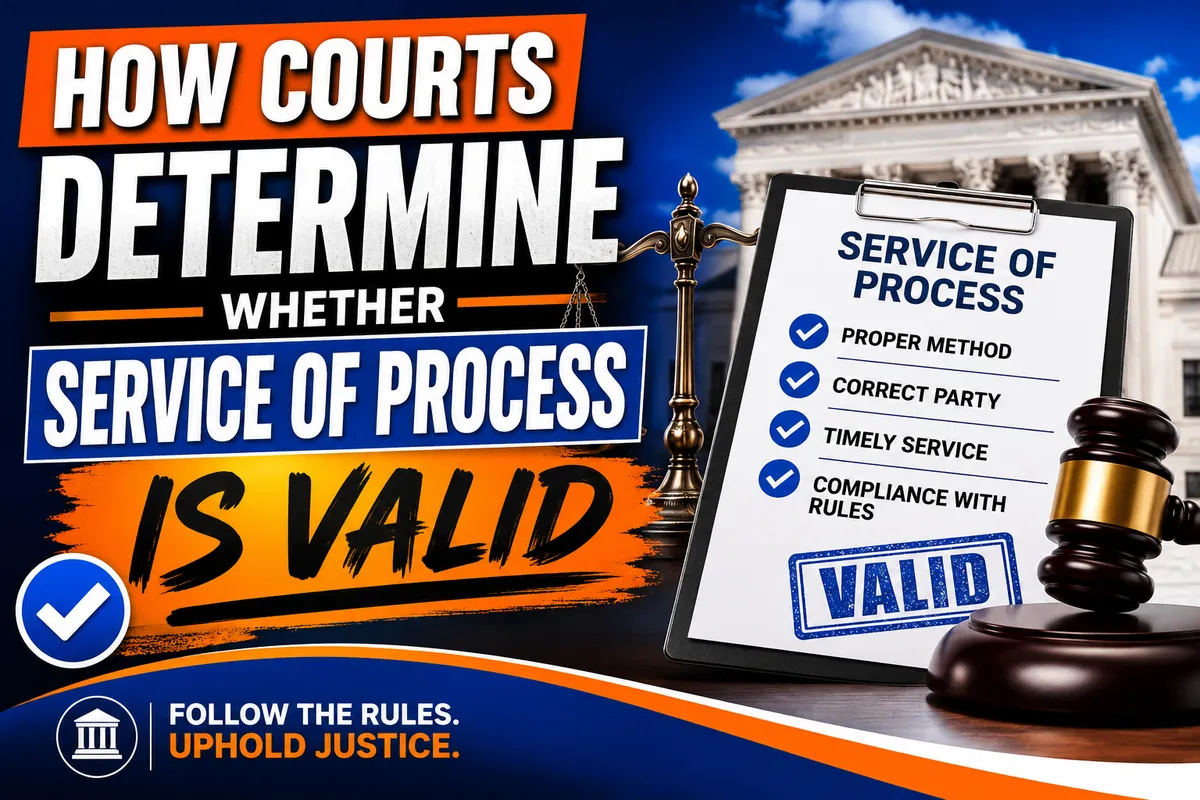
How Courts Determine Whether Service of Process Is Valid
Service of process is one of the most important steps in any legal proceeding. Before a court can hear a case or issue judgments against a defendant, it must be satisfied that the defendant received proper legal notice. This requirement protects an individual's constitutional right to due process and ensures every party has a fair opportunity to respond.
Because of its importance, courts carefully evaluate whether service complies with applicable laws and procedural rules. Even when a defendant eventually learns about a lawsuit, service that does not meet legal standards may still be challenged. Understanding how courts determine service validity helps attorneys, law firms, businesses, landlords, and professional process servers avoid costly delays and procedural errors.
Introduction to Service of Process
Service of process is the formal delivery of legal documents such as summonses, complaints, subpoenas, petitions, and other court filings to the individual or entity involved in a legal action. The primary purpose is to provide official notice that legal proceedings have been initiated.
Without valid service of process, courts generally cannot obtain personal jurisdiction over the defendant. If service is defective, judges may postpone hearings, quash the service, dismiss the action without prejudice, or require the plaintiff to complete service again.
For process servers and legal professionals, understanding service of process requirements is essential for ensuring cases move forward efficiently.
What Are the Legal Requirements for Valid Service of Process?
Although process serving laws vary by state, courts generally look for several basic legal requirements before recognizing service as valid.
These requirements typically include:
Delivery of the correct legal documents
Service completed by an authorized individual
Compliance with court process serving rules
Service completed within applicable deadlines
Use of a legally approved method of service
Proper documentation through a Proof or Affidavit of Service
Failure to satisfy any of these requirements can result in challenges to the validity of process service.
Common Service of Process Methods
Courts recognize several service of process methods depending on the jurisdiction and the circumstances of the case.
Personal Service
Personal service is the preferred method in most jurisdictions. The process server personally delivers the legal documents directly to the defendant.
Because the documents are handed directly to the intended recipient, personal service is generally the strongest evidence of proper notice.
Substitute Service
When personal service cannot be completed after reasonable attempts, many states permit substitute service.
This may involve leaving the documents with a responsible adult residing at the defendant's home or an authorized individual at the defendant's workplace, depending on state law.
Courts usually require proof that reasonable attempts were made before substitute service was used.
Service by Mail
Some jurisdictions allow service by certified mail or registered mail. Courts typically require signed delivery confirmation or other evidence showing the documents were successfully delivered.
Not every state permits service by mail for every type of legal action.
Service by Publication
When a defendant cannot be located despite extensive efforts, courts may authorize service by publication.
This alternative method usually requires court approval and evidence that the plaintiff exercised due diligence before requesting publication.
Electronic Service
Some courts now allow electronic service through email or electronic filing systems in limited situations. Electronic service is generally permitted only when authorized by statute, court order, or procedural rules.
Factors Courts Consider When Determining Service Validity
Judges examine several important factors before deciding whether legal service of process was properly completed.
Was the Correct Person Served?
The first question is whether the documents were delivered to the legally appropriate recipient.
Depending on the case, this may include:
The named defendant
A registered agent
An authorized corporate officer
A legally qualified household member
A government official authorized to accept service
Serving the wrong individual often renders service invalid.
Was the Proper Method Used?
Courts evaluate whether the chosen method complied with applicable process serving laws.
Even if the defendant eventually receives the documents, using an unauthorized method may invalidate the service.
Were Jurisdiction-Specific Rules Followed?
Every jurisdiction has unique service of process requirements. Courts review whether the process server complied with local rules involving:
Service deadlines
Required number of service attempts
Time restrictions
Rules governing businesses, corporations, and government agencies
Court-approved alternative service procedures
Strict compliance with these rules is often necessary.
Is There Proper Proof of Service?
One of the most important documents courts review is the Proof of Service or Affidavit of Service.
This sworn document generally includes:
Date and time of service
Exact location
Method used
Description of the individual served
Name and signature of the process server
Accurate documentation strengthens the court's confidence in the validity of process service.
Was Due Diligence Exercised?
When personal service cannot be completed, courts often ask whether reasonable efforts were made before using alternative methods.
Examples of due diligence include:
Multiple attempts on different days
Visits at different times of day
Attempts at multiple known addresses
Skip tracing
Verification of current residence or employment
Detailed records of these efforts help demonstrate compliance with process server guidelines.
Did the Defendant Receive Fair Notice?
Although technical compliance is critical, courts also consider whether the defendant received meaningful notice of the legal action.
If improper service prevented the defendant from responding or appearing in court, judges may order that service be completed again to preserve due process.
How Courts Verify Service of Process
Courts primarily rely on documentary evidence submitted by the process server.
This evidence may include:
Affidavits of Service
Proofs of Service
GPS location records
Photographs where permitted
Detailed service logs
Notes documenting service attempts
If the defendant challenges service, the court may hold a hearing where the process server testifies regarding how service was completed.
Reliable documentation often plays a decisive role in court acceptance of process service.
Common Reasons Courts Reject Service of Process
Courts may determine that service is invalid for several reasons, including:
Serving the wrong person
Missing statutory deadlines
Using an unauthorized method
Incomplete Proof of Service
Failure to exercise due diligence
Serving an outdated address
Violating state-specific court process serving rules
Improper service on businesses or government agencies
Correcting these errors often requires additional service attempts, increasing both legal expenses and delays.
Consequences of Invalid Service of Process
When courts find service invalid, several outcomes are possible.
These may include:
Delayed hearings
Orders requiring re-service
Motions to quash service
Dismissal without prejudice
Increased litigation costs
Potential expiration of statutes of limitation if service deadlines are missed
Proper service from the outset helps avoid these costly complications.
How Process Servers Can Ensure Valid Service
Professional process servers improve the likelihood that service will withstand judicial scrutiny by following established best practices.
Recommended process server guidelines include:
Understanding current state and local service requirements
Verifying the identity of the recipient
Documenting every service attempt
Recording dates, times, and locations accurately
Maintaining complete service records
Using technology such as GPS tracking when permitted
Preparing thorough and accurate affidavits of service
Attention to detail is one of the strongest defenses against later challenges.
The Value of Professional Process Servers
Professional process servers bring specialized knowledge of process serving laws and court procedures that helps minimize service-related errors.
Experienced professionals understand:
Jurisdiction-specific requirements
Complex corporate and government service rules
Alternative service procedures
Documentation standards courts expect
Proper handling of evasive defendants
Their expertise helps attorneys and clients avoid unnecessary delays while improving the likelihood of court acceptance of process service.
Frequently Asked Questions
Why is service of process important in legal proceedings?
Service of process ensures every party receives official notice of legal proceedings and has an opportunity to respond. Proper service protects due process rights and allows courts to exercise jurisdiction over defendants.
How do courts determine service validity?
Courts determine service validity by reviewing whether the correct individual was served, the approved service method was used, all service of process requirements were satisfied, deadlines were met, and proper documentation supports the service.
What makes a service of process legally valid?
A valid service of process complies with all applicable process serving laws, follows court process serving rules, uses an authorized service method, and includes accurate proof that the defendant received proper legal notice.
What happens if service of process is invalid?
Invalid service may result in delayed proceedings, court orders requiring new service, dismissal of the case, additional legal costs, or procedural complications that affect the progress of litigation.
How do different states handle service of process?
Each state establishes its own procedural rules governing service methods, deadlines, substitute service, publication, and documentation. Attorneys and process servers should always review the laws of the jurisdiction where service will occur.
Final Thoughts
Understanding how courts determine service validity is essential for attorneys, law firms, landlords, businesses, and professional process servers. Courts closely examine whether legal service of process complied with applicable statutes, procedural rules, and constitutional due process requirements.
Accurate documentation, careful adherence to service of process requirements, and thorough due diligence significantly improve the likelihood that service will withstand judicial review. Working with experienced professionals helps ensure that legal papers are served correctly the first time, allowing cases to proceed efficiently while minimizing unnecessary delays and challenges.
At MPS (Mission Process Server), our experienced process servers understand the importance of valid service of process. We follow all applicable process serving laws, comply with jurisdiction-specific court process serving rules, maintain detailed documentation, and provide accurate affidavits that support court acceptance of process service. Whether serving individuals, businesses, or government entities, MPS is committed to delivering reliable, legally compliant service that helps move your case forward with confidence.
Stay sharp. Stay informed. Live Mighty!
Read the full article at www.mightyprocessserver.com
This article is published by Process Server Daily, powered by MightyAutomation.ai, the leader in legal support intelligence.