PROCESS SERVER DAILY
process server tips
Topic hub — 91 articles
 process server tips
The Serve Didn’t Go as Planned. Now What? Handling Difficult Service Attempts
When a process serving attempt goes sideways: what to record, how to update clients, when to retry or research, and how diligence notes protect you.
 process server tips
Can Text Messages Be Used as Legally Binding Agreements?
The legal framework for text messages and other digital transactions in the United States is based largely on two laws: the Uniform Electronic Transactions Act, commonly called UETA, and the Electronic Signatures in Global and National Commerce Act, known as the E-SIGN Act.
 process server tips
How Social Media Posts Become Courtroom Evidence
Facebook, Instagram, X, Snapchat, TikTok, and LinkedIn record conversations, locations, relationships, opinions, and life events. A casual post can later establish a timeline, challenge testimony, reveal intent, or connect someone to an event. As a result, social media evidence in court matters in civil disputes, criminal investigations, family matters, employment claims, and personal injury cases.
 process server tips
Recognizing Phishing Attempts Targeting Legal Professionals
Cyber threats are a growing concern across every industry, and the legal field is no exception. The phishing attempts legal professionals receive today are increasingly convincing, personalized, and difficult to detect. Instead of sending obviously fraudulent messages, cybercriminals may research a law firm, attorney, process server, employee, or client before creating a targeted communication.
 process server tips
Still Managing Jobs the Old-Fashioned Way? It Might Be Time for a Better System
Still managing process serving jobs with notebooks, texts, and spreadsheets? Signs you've outgrown the old way, plus a practical switch checklist.
 process server tips
Documenting a Service Attempt Without Taking Photographs
Photographs can strengthen a process server’s records, but they are not always permitted, practical, or necessary. A recipient may be located inside a secure building, a court may restrict photography, a client may prohibit it, or taking out a phone may create a safety concern. Equipment can also fail at the worst possible moment.
 process server tips
How Professional Association Records Support Skip Tracing
Locating individuals for legal purposes can become difficult when residential addresses, telephone numbers, and employment information are outdated. A person may have relocated, changed jobs, stopped using an old phone number, or created a limited online presence. In these situations, professional association records can provide useful information about a subject’s occupation, employer, office location, certification, and industry connections.
 process server tips
Why Scope Creep Hurts Process Serving Profitability
A process-serving assignment may begin with one address, three attempts, a standard deadline, and an agreed fee. The job changes when the client adds another location, requests evening surveillance, demands faster completion, or asks for repeated custom reports without adjusting the price. This gradual expansion is known as scope creep.
 process server tips
Protecting Your Process Serving Business From Chargebacks
Chargebacks can disrupt cash flow, create additional processing fees, and damage the relationship between a process-serving company and its payment provider. When a client disputes a credit card transaction, the card issuer may reverse the payment while the claim is reviewed. The process server must then submit evidence showing that the transaction was authorized and that the agreed services were provided.
 process server tips
Build a Safety Stack Before You Knock
Process serving combines public contact, legal responsibility, urgency, and uncertainty. A process server may arrive at a residence, workplace, hospital, apartment complex, or parking lot with limited information about the person being served. Within seconds, the server may need to determine whether the interaction is routine or becoming unsafe.
 process server tips
Managing Reassigned Process Serving Jobs
Reassigning process serving jobs is a normal part of managing legal support operations. Schedules change, recipients move, servers become unavailable, and deadlines may require faster local coverage. A well-managed reassignment protects the client’s case and helps ensure that service continues without unnecessary delay.
 process server tips
How to Separate Reliable Data From Skip-Tracing Noise
Skip-tracing is the process of locating an individual by examining addresses, phone numbers, public records, property information, relatives, business connections, and other lawful data sources. It is an essential skill for process servers, attorneys, and law firms handling difficult service assignments.
 process server tips
How Probate Records Can Help Locate Difficult-to-Find Individuals
Probate records are legal documents created when a deceased person’s estate is administered through a court. The probate process may involve validating a will, appointing a personal representative, notifying interested parties, paying valid debts, identifying assets, and distributing property to heirs or beneficiaries.
 process server tips
Serving Documents to Seasonal and Migrant Workers
Serving documents to seasonal and migrant workers presents distinct challenges for process servers, attorneys, and law firms. These workers may travel between states, change employers frequently, live in temporary housing, or work in remote locations. By the time a process server receives an assignment, the address provided by the client may no longer be current.
 process server tips
Process Serving When the Recipient Is in Witness Protection
The Witness Protection Program is an important part of the American justice system. It protects individuals whose testimony or cooperation with authorities may place them or their families in danger. Protected witnesses may be relocated, provided with new identification, and assisted in establishing a safer life away from known threats.
 process server tips
Using Court Dockets to Discover Updated Contact Information
Court dockets are official chronological records of activity in legal cases. They function as roadmaps that show what has happened from the beginning of a case through its conclusion. A docket may list every complaint, motion, response, order, hearing, judgment, attorney appearance, and service event entered by the court.
 process server tips
Using Professional Licenses to Support Skip Tracing
A subject may have moved without updating an address, changed employment, started using a different name, or intentionally avoided contact. A careful skip tracing process gathers information from lawful sources, compares identifying details, and develops address or workplace leads that can be verified before a service attempt.
 process server tips
How Process Servers Handle Cruise Ships and Passenger Terminals
Process serving is a crucial part of the legal system, ensuring that individuals and organizations receive proper notice of legal proceedings involving them. However, serving legal documents on cruise ships presents unusual challenges that require careful planning, accurate timing, and knowledge of port security procedures.
 process server tips
Preparing Your Process Serving Business for an Audit
Audits help process-serving companies verify that their records, finances, licenses, service procedures, and client communications are accurate and compliant. They can expose weaknesses before those problems lead to disputed service, financial penalties, damaged client relationships, or regulatory action.
 process server tips
Managing After-Hours and Weekend Service Requests
Legal deadlines and recipient schedules do not always fit within traditional business hours. Some individuals work during the day, travel frequently, or are rarely available at home Monday through Friday. In these situations, after-hours process serving may provide the best lawful opportunity to complete delivery.
 process server tips
Safe Vehicle Positioning During Service Attempts
A process server’s vehicle is more than transportation. It provides a place to organize documents, confirm assignment details, communicate with clients, and leave when an encounter becomes unsafe. For these reasons, safe vehicle positioning should be part of the planning process for every service attempt.
 process server tips
How to Protect Confidential Information in Field Notes
Field notes are an essential part of professional process serving. They help process servers document service attempts, prepare accurate affidavits, answer client questions, and establish what occurred in the field. These notes may contain names, addresses, vehicle descriptions, photographs, telephone numbers, personal schedules, witness statements, and details about active legal cases.
 process server tips
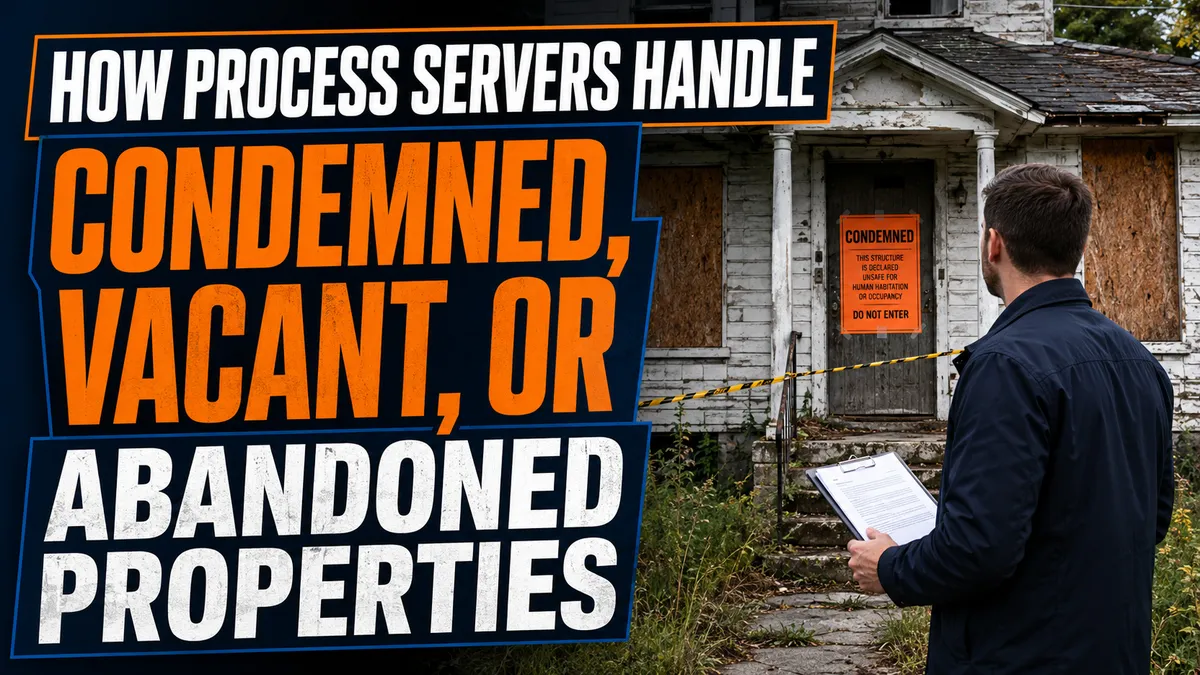
How Process Servers Handle Condemned, Vacant, or Abandoned Properties
A process server condemned property assignment may involve structural hazards, government restrictions, uncertain occupancy, outdated address information, or people living at the location without clear authorization. Process servers must balance persistence with legal compliance, accurate reporting, and personal safety.
 process server tips
What to Do When a Recipient Destroys the Documents
Most recipients accept the documents without a serious incident. Others may refuse to touch them, throw them away, tear them apart, or destroy them immediately after delivery. A recipient destroys legal documents for many possible reasons, including anger, fear, confusion, or a mistaken belief that destroying the papers will stop the case.
 process server tips
Serving Documents to Rideshare and Delivery Drivers
The gig economy has changed how millions of people work. Rideshare drivers provide on-demand transportation through platforms such as Uber and Lyft, while delivery drivers use services such as DoorDash, Uber Eats, and Instacart to bring food, groceries, and other goods to customers.
 process server tips
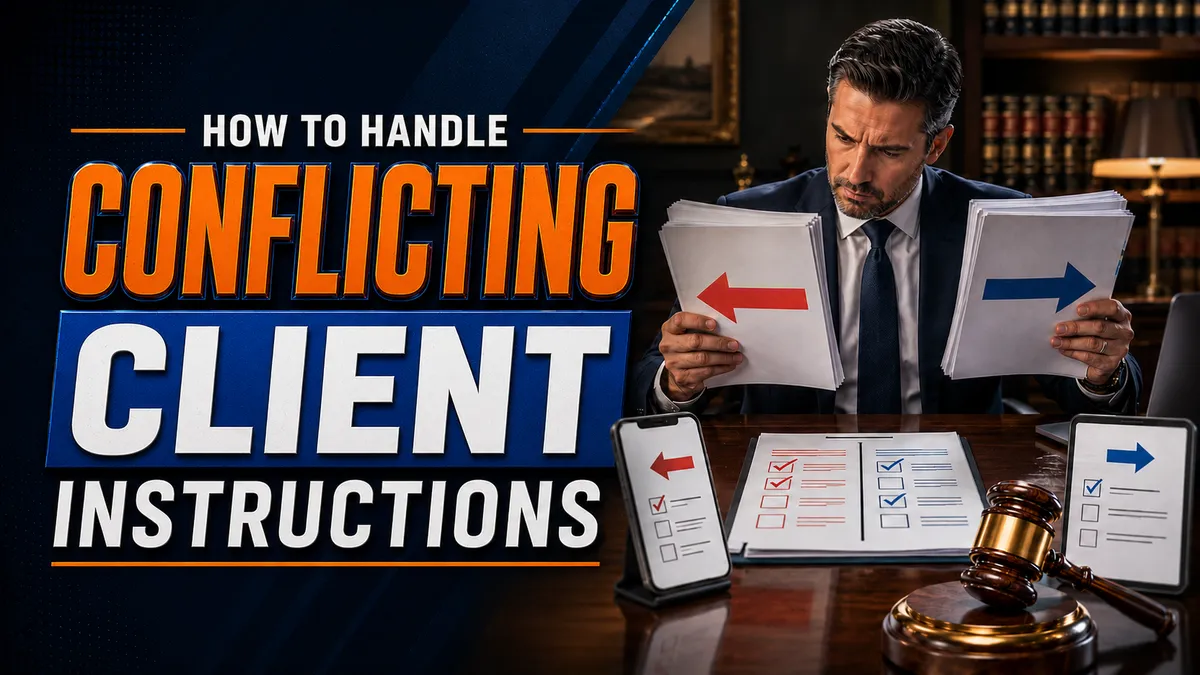
How to Handle Conflicting Client Instructions
Conflicting client instructions may involve different addresses, deadlines, document versions, service methods, fees, or attempt requirements. A process server should never resolve an important contradiction through guesswork. The conflict should be documented, the affected activity should be paused when necessary, and clarification should be obtained from an authorized contact.
 process server tips
How Protective Orders Affect Service Attempts
Effective protective orders service requires more than delivering documents. The process server must understand the assignment, follow the court’s instructions, protect sensitive information, document every attempt, and avoid creating additional contact between the parties.
 process server tips
Process Serving for Class Action Lawsuits
Class action lawsuits are complex legal proceedings in which one or more representative parties pursue claims on behalf of a larger group with similar legal or factual issues. These cases may involve defective products, employment practices, consumer rights, financial services, data breaches, discrimination, or other conduct affecting many people.
 process server tips
Why Professional Liability Insurance Matters for Process Servers
Process servers perform an essential function within the legal system. They deliver summonses, subpoenas, complaints, notices, and other court documents that inform individuals and organizations about legal proceedings. Because this work affects deadlines, hearings, and the rights of the parties involved, even a small error can create significant consequences.
 process server tips
Reducing Unpaid Invoices in a Process Serving Company
An effective system for managing unpaid invoices process serving companies encounter can protect cash flow, strengthen client relationships, and support long-term business growth. Process serving companies can reduce payment delays by setting clear expectations, using dependable technology, monitoring accounts, and responding quickly when an invoice becomes overdue.
 process server tips
How to Price Rural and High-Mileage Process Serving Assignments
Process serving in remote locations requires a different pricing approach from serving documents in a compact urban area. City assignments can often be grouped within a small radius, while rural jobs may require hours of travel for a single address.
 process server tips
How Process Servers Handle Military Bases and Active-Duty Personnel
A military base is controlled federal property with security rules designed to protect personnel, equipment, facilities, and military operations. A process server military base assignment therefore requires advance preparation, coordination with installation authorities, and compliance with both service laws and security procedures.
 process server tips
Can Legal Documents Be Served at a Coworking Space or Virtual Office?
A process server coworking space assignment requires careful preparation. Although legal documents can sometimes be served at these locations, the validity of service depends on the applicable laws, the defendant’s relationship to the address, the identity of the recipient, and whether that person is authorized to accept service.
 process server tips
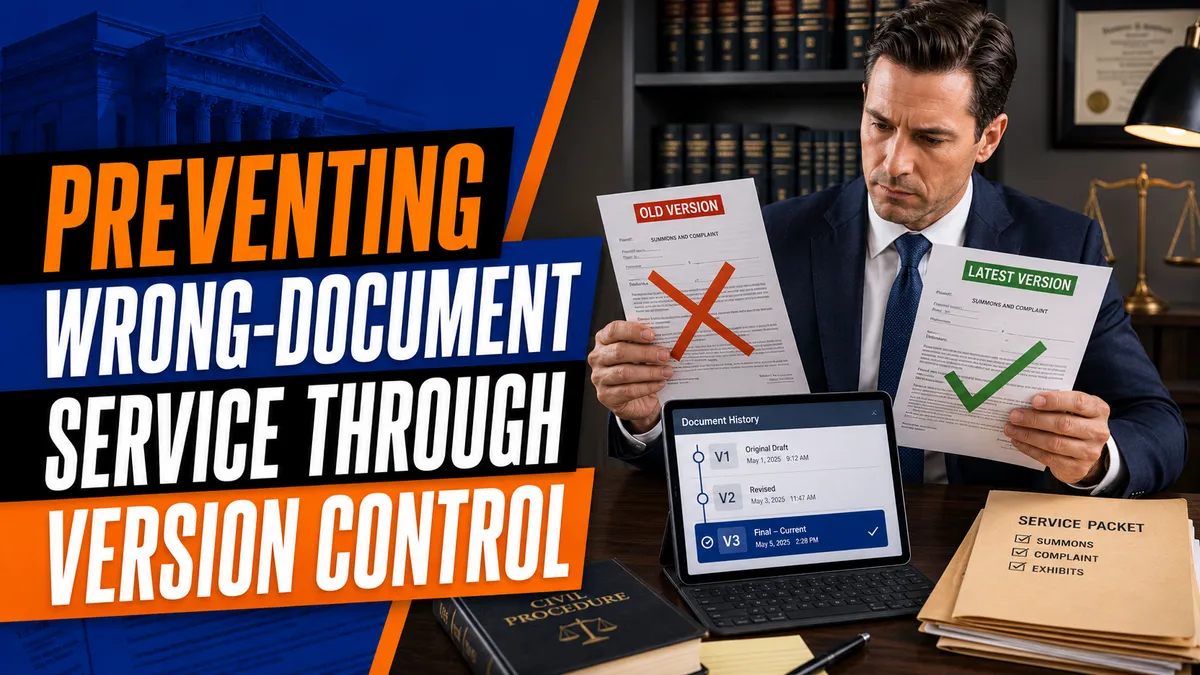
Preventing Wrong-Document Service Through Version Control
Document version control is a system for tracking revisions, identifying approved files, and preserving a clear history of document changes. It gives process servers, attorneys, and law firms a reliable way to determine which version is authorized for service.
 process server tips
Handling Multiple Defendants at the Same Address
Serving multiple defendants at the same address may appear straightforward, but it requires careful planning and organization. The defendants may be spouses, relatives, roommates, business partners, employees, or separate companies operating from the same property.
 process server tips
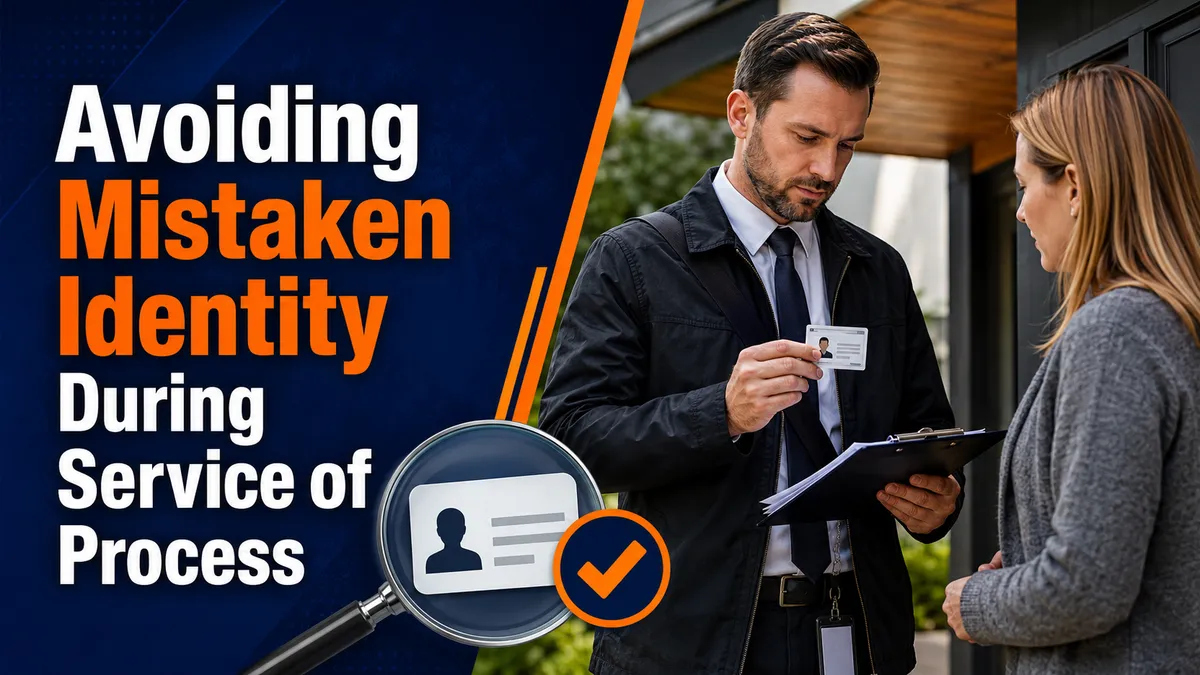
Avoiding Mistaken Identity During Service of Process
Mistaken identity occurs when legal documents are delivered to someone other than the intended recipient. It may result from incorrect information, shared names, outdated addresses, misleading statements, or insufficient verification. When the wrong person receives legal papers, the service may be challenged and the case may experience delays, additional expenses, or other legal complications.
 process server tips
Serving Legal Documents at Ports and Aboard Commercial Vessels
Serving legal documents at ports is an important responsibility for process servers handling maritime disputes, shipping claims, employment matters, contractual disagreements, and other legal actions involving the maritime industry. Ports are active centers of international commerce where vessels, cargo, employees, contractors, and shipping companies operate under strict schedules and security requirements.
 process server tips
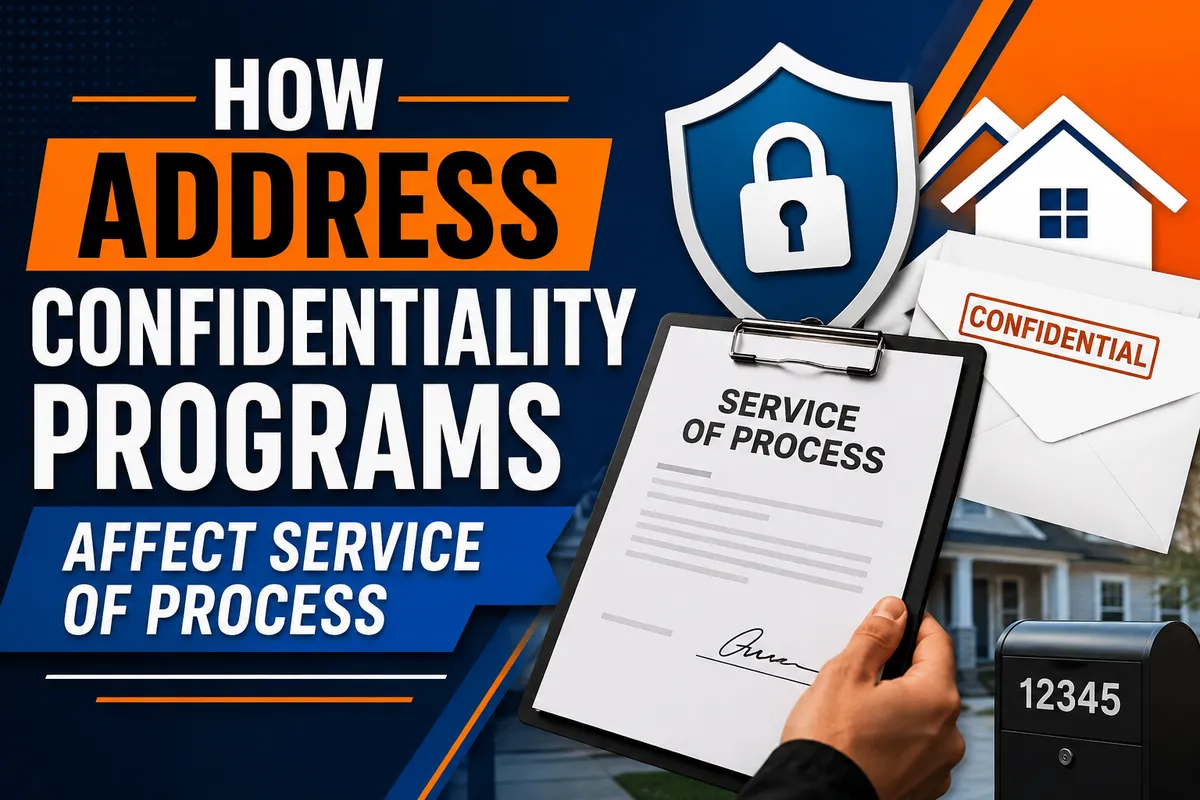
How Address Confidentiality Programs Affect Service of Process
Protecting personal information is essential for individuals whose safety may be threatened if their location becomes public. Victims of domestic violence, stalking, sexual assault, human trafficking, and similar crimes may face serious danger when their home, work, or school address can be found through public records.
 process server tips
Preventing Burnout in Field Work
Working in the legal support industry often means spending long hours on the road, managing changing schedules, meeting court deadlines, and handling difficult situations. While process serving can be rewarding, these daily demands can gradually take a toll if stress is not managed effectively. Preventing burnout in process servers is essential not only for personal well-being but also for maintaining professionalism, accuracy, and high-quality service.
 process server tips
Serving Tribal Lands: Legal Considerations
Serving legal documents on tribal lands requires careful planning, a thorough understanding of jurisdiction, and respect for tribal sovereignty. Unlike standard service assignments, serving process on tribal lands often involves navigating tribal, federal, and state laws that may overlap depending on the circumstances of the case. Process servers who fail to understand these legal considerations risk invalid service, delayed court proceedings, and jurisdictional disputes.
 process server tips
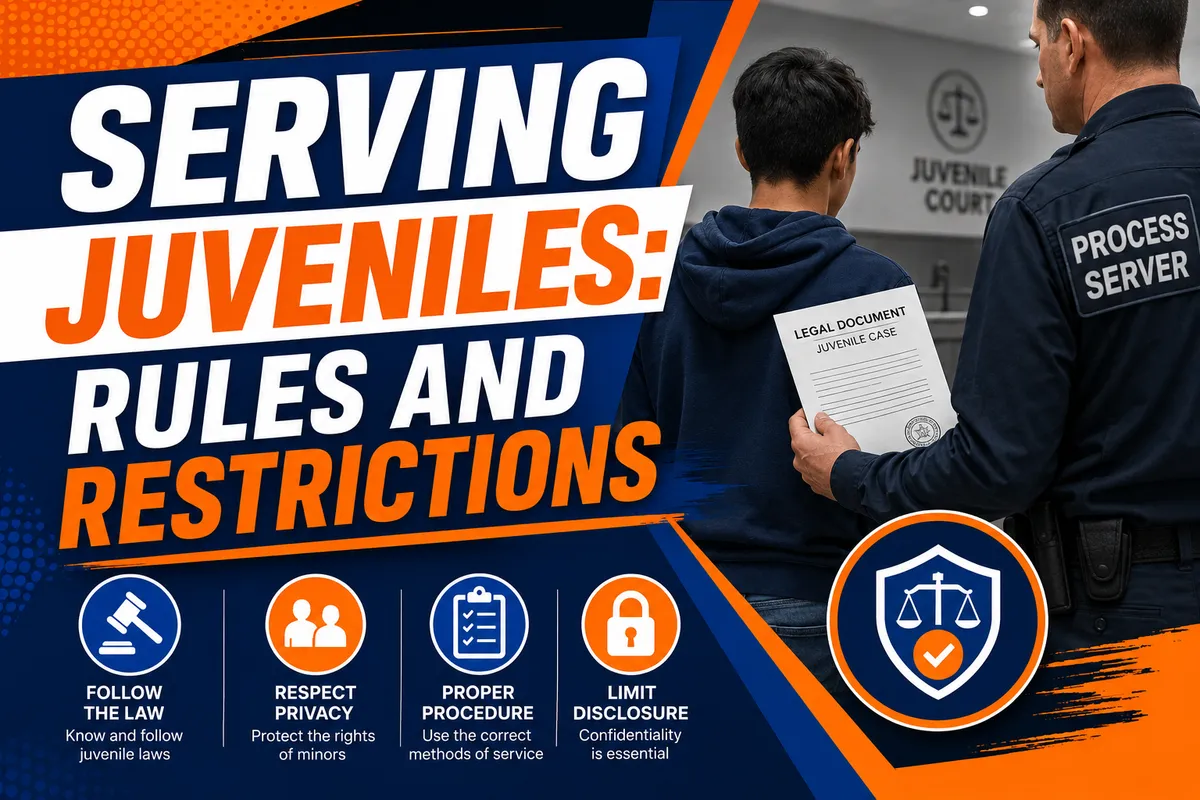
Serving Juveniles: Rules and Restrictions
Serving legal documents involving minors requires a thorough understanding of the law, careful attention to detail, and strict compliance with court procedures. Unlike adults, juveniles often receive additional legal protections that affect how service of process must be completed. For licensed process servers, attorneys, and law firms, understanding the requirements for serving juveniles process server assignments is essential to protecting due process and avoiding unnecessary delays.
 process server tips
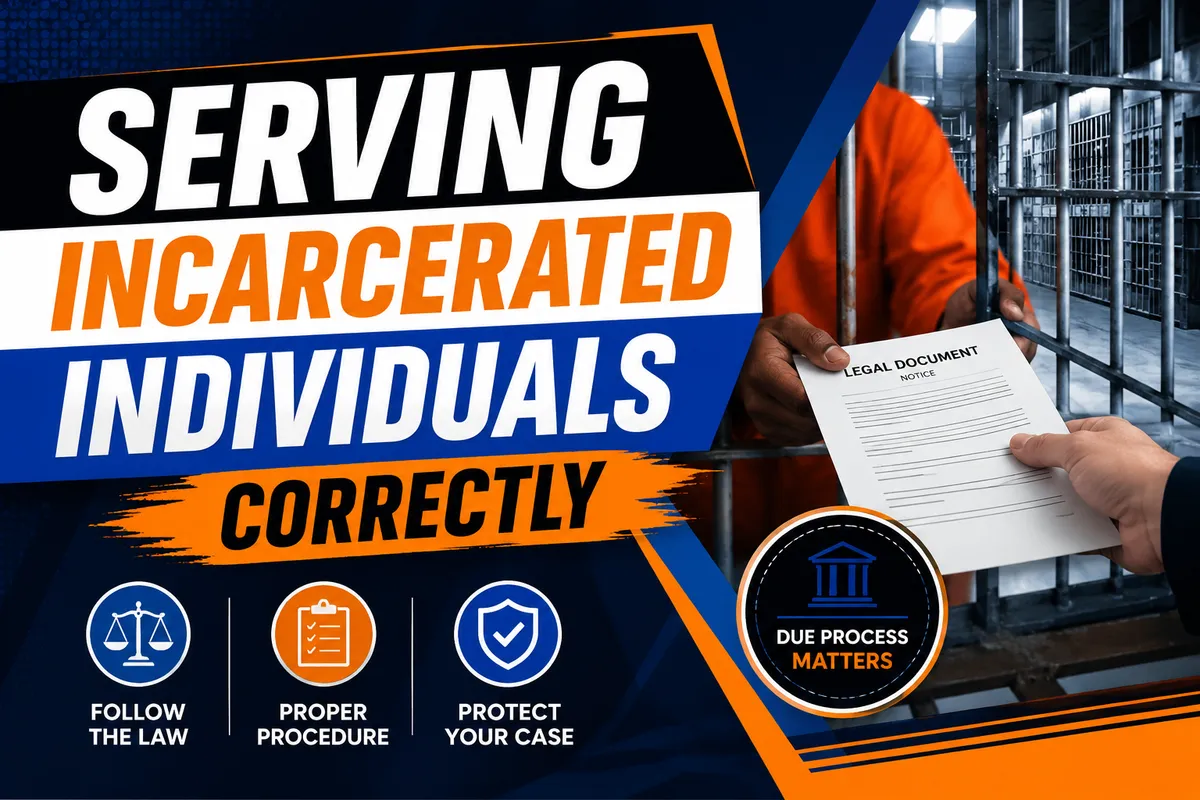
Serving Incarcerated Individuals Correctly
Serving incarcerated individuals requires more planning and coordination than traditional service of process. Correctional facilities operate under strict security procedures, and every jail or prison has its own policies governing visitor access and legal document delivery. Attorneys, law firms, and licensed process servers must understand these requirements to ensure that legal documents are delivered properly while protecting the rights of incarcerated individuals.
 process server tips
The Process Server's Role in Business Torts
The role of a process server in business torts is to ensure that legal documents are delivered accurately, professionally, and in compliance with applicable laws. Proper service of process protects the constitutional right to due process while allowing business litigation to move forward efficiently. Professional process servers play an essential role in maintaining the integrity of the judicial system and supporting attorneys, businesses, and courts throughout complex commercial disputes.
 process server tips
Managing Long-Term Clients Successfully
Success in professional process serving is not measured only by how many assignments you complete. It is also determined by how well you build and maintain relationships with the clients who trust you with their legal support needs. Attorneys, law firms, collection agencies, corporations, and legal support companies often require ongoing service, making long-term client management one of the most important aspects of a successful business.
 process server tips
Process Serving in Adoption Cases
Adoption is one of the most meaningful legal proceedings handled by the courts. While the outcome creates a permanent legal relationship between a child and an adoptive family, the process requires careful compliance with legal procedures to protect the rights of everyone involved. One of the most important steps is process serving in adoption cases, which ensures that required parties receive proper notice of the legal action.
 process server tips
Understanding Writs of Execution and the Process Server's Role
After a court issues a judgment, the prevailing party may need additional legal remedies to collect money, recover property, or enforce the court's decision. One of the most important enforcement tools available is a writ of execution. This court-issued order authorizes the enforcement of a judgment according to applicable laws and procedures.
 process server tips
How Process Servers Support Arbitration Proceedings
Arbitration has become one of the most widely used methods of resolving disputes outside the traditional courtroom. It offers businesses, consumers, employers, and individuals a faster and often more cost-effective alternative to litigation while maintaining a structured legal process. Rather than having a judge decide the outcome, arbitration relies on one or more neutral arbitrators who review the evidence and issue a decision based on the applicable law and the parties' agreement.
 process server tips
How GIS Mapping Benefits Legal Field Services
Technology continues to transform the legal industry, giving attorneys, process servers, investigators, and legal support professionals access to smarter tools for managing assignments. One of the most valuable innovations is Geographic Information System (GIS) mapping. By combining geographic data with digital mapping technology, GIS mapping legal services help professionals visualize locations, analyze property information, optimize travel routes, and improve decision making before arriving at an assignment.
 process server tips
Serving Foreign Corporations Registered in the U.S.
Serving foreign corporations in the U.S. requires accuracy, legal knowledge, and careful execution. As more international companies register to conduct business in the United States, process servers, attorneys, and law firms must understand how to properly deliver legal documents to these entities.
 process server tips
Serving Defendants Living in Gated Communities
Serving legal documents inside gated communities requires preparation, professionalism, and a clear understanding of applicable laws. As more residential developments use controlled entrances, security personnel, and private access systems, process serving gated communities has become increasingly complex. While these communities are designed to protect residents, they can also create obstacles for legal professionals attempting to complete valid service of process.
 process server tips
Preparing for High Risk Service Locations
Every process server eventually encounters assignments that require extra planning and heightened awareness. While many service attempts are completed without incident, some involve high-risk service locations where personal safety, environmental hazards, or the recipient's behavior can increase the likelihood of confrontation.
 process server tips
Understanding Witness Fees and Service Requirements
For process servers, attorneys, and law firms, understanding witness fees and service requirements is essential for ensuring that subpoenas are legally enforceable and that witnesses receive proper notice. While laws differ by state and court, knowing the general principles helps process servers avoid costly mistakes.
 process server tips
When to Decline a Service Assignment
A professional process server is expected to complete assignments accurately, efficiently, and in full compliance with the law. While accepting new work is an important part of growing a business, knowing when to refuse a service assignment is equally important. Declining an assignment for legitimate legal, ethical, or safety reasons protects both the process server and the client.
 process server tips
Building a Reputation for Reliability
In the legal services industry, reputation is earned one assignment at a time. Attorneys, law firms, collection agencies, and legal support professionals rely on process servers to deliver legal documents accurately, professionally, and within strict deadlines. When a process server consistently performs at a high level, they become known as one of the reliable process servers clients can trust with their most important cases.
 process server tips
Best Times of Day to Attempt Service
In legal proceedings, timing can be just as important as accuracy. A process server may have the correct address and all the necessary legal documents, but attempting service at the wrong time can lead to repeated unsuccessful visits, increased expenses, and unnecessary delays. Understanding the best times for process serving helps licensed process servers improve efficiency, reduce repeat attempts, and provide better service to attorneys, law firms, and clients.
 process server tips
Public Records Every Process Server Should Know
Public records provide valuable information that helps licensed process servers verify addresses, identify property ownership, locate business entities, confirm identities, and support due diligence. Knowing how to perform an effective public records search can reduce failed attempts, save time, improve safety, and increase first-attempt success rates.
 process server tips
How to Handle Rush Jobs Efficiently: Proven Tips for Process Servers
Legal deadlines rarely wait. Attorneys may receive emergency court orders, law firms may need documents served before a hearing, and clients often require immediate assistance when unexpected legal situations arise. In these moments, process servers are expected to respond quickly while maintaining complete accuracy and compliance with state laws. Successfully managing rush assignments requires more than simply working faster. It requires preparation, organization, communication, and the right technology. A professional who can consistently complete urgent assignments becomes a trusted partner for attorneys and law firms who rely on dependable service. This guide explains how to improve rush process serving, increase efficiency, and develop systems that allow you to handle time-sensitive assignments with confidence.
 process server tips
Time Management Tips for Busy Process Servers
Success in process serving depends on more than simply delivering legal documents. Every day presents new challenges, including multiple assignments, changing schedules, long hours on the road, client communication, court deadlines, and detailed documentation. Managing all of these responsibilities efficiently requires strong organizational skills and a strategic approach to time.
 process server tips
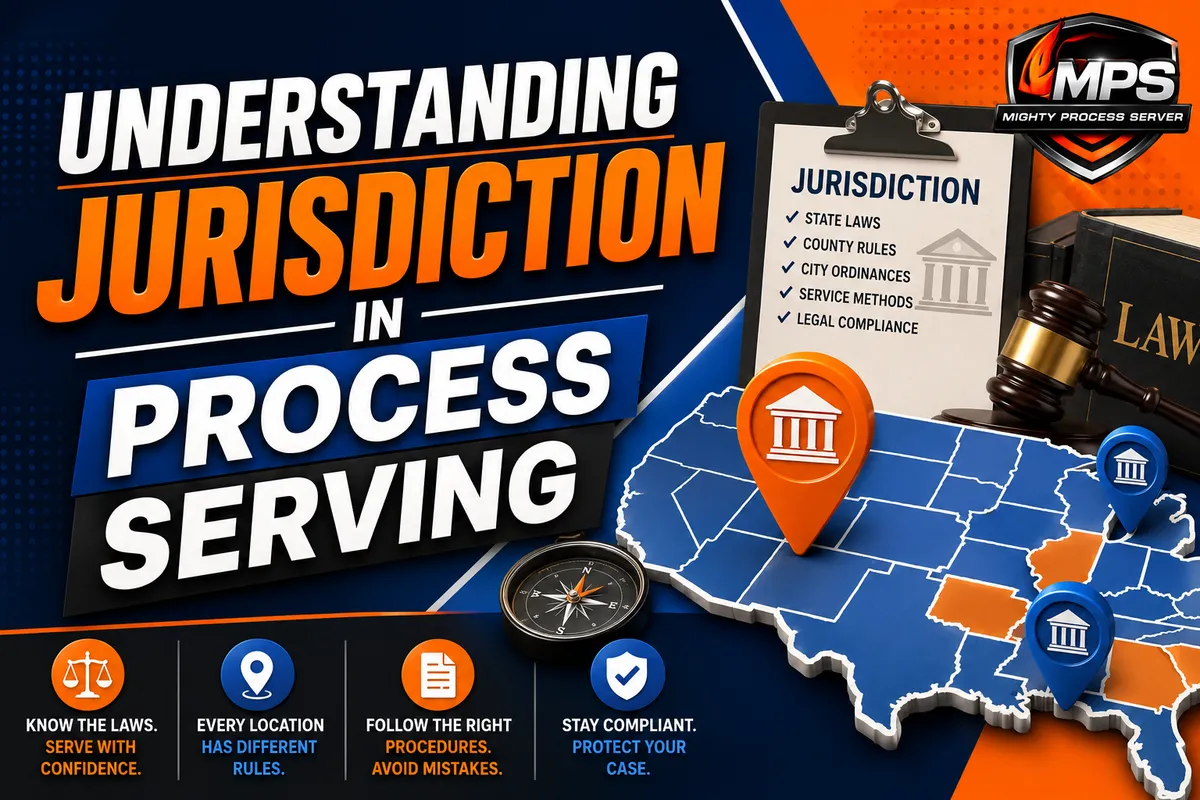
Understanding Jurisdiction in Process Serving: A Complete Guide for Legal Professionals
Understanding jurisdiction in process serving is essential for anyone involved in legal proceedings, from licensed process servers to attorneys and law firms. Jurisdiction determines the legal authority under which a court operates and the geographic area where a process server can legally deliver legal documents. It is one of the foundations of the judicial system because it ensures that cases are heard by the proper court and that every party receives legally valid notice of legal action.
 process server tips
Augmented Reality Navigation for Field Service Professionals
Field service professionals are increasingly relying on advanced technology to complete assignments faster, reduce errors, and improve customer satisfaction. Among the latest innovations is Augmented Reality (AR) navigation, a technology that overlays digital information onto the real world through smartphones, tablets, or smart glasses.
 process server tips
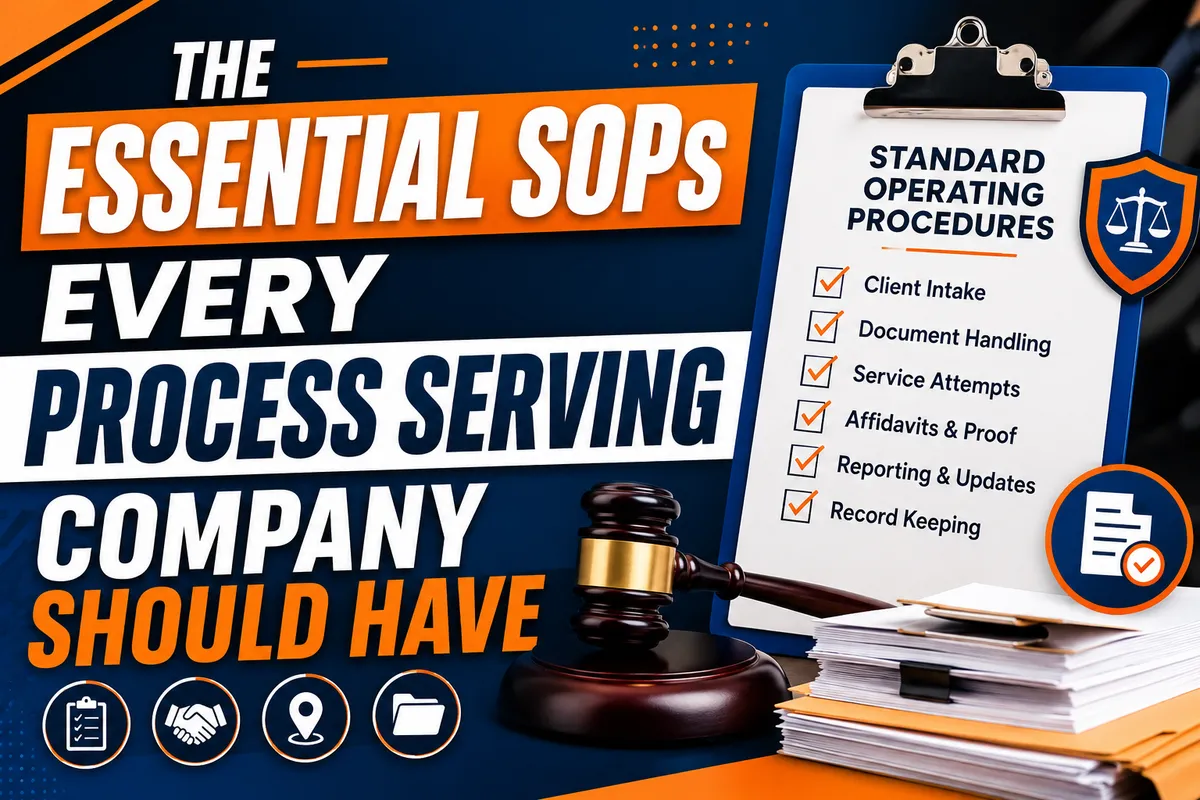
The Essential SOPs Every Process Serving Company Should Have
Standard Operating Procedures, commonly known as SOPs, are written documents that provide detailed instructions for completing recurring tasks. They create a structured framework that helps employees perform their responsibilities accurately, efficiently, and consistently. In the legal services industry, where deadlines, documentation, and compliance are critical, SOPs help ensure every assignment is handled according to established process server standard procedures.
 process server tips
Process Serving Certifications Explained
The legal system depends on proper notification to ensure every party has an opportunity to respond to legal actions. This responsibility falls on process servers, who deliver legal documents such as summonses, complaints, subpoenas, writs, and other court papers according to applicable laws. Because proper service can directly affect the validity of a legal case, professionalism and legal knowledge are essential. As the legal field continues to evolve, the role of the process server has become increasingly important. Courts expect service to be completed accurately, documented thoroughly, and performed within the rules established by each jurisdiction. This is where process serving certification becomes valuable.
 process server tips
7 Reasons Your Service of Process May Be Delayed
Service of process is one of the most important steps in the legal system. Before a court case can move forward, the defendant must receive proper legal notice according to the applicable laws. When this step is delayed, court schedules may be affected, legal deadlines may be extended, and clients may experience unnecessary frustration.
 process server tips
Mistakes New Process Servers Make (And How to Avoid Them)
Process serving is a critical component of the legal system because it ensures individuals receive proper notice of legal proceedings. Courts rely on valid service of process to protect due process rights and move cases forward. New process servers often encounter obstacles that affect their success. Some mistakes are operational, while others involve legal compliance or personal safety. Understanding these challenges is one of the most important steps toward becoming a successful process server.
 process server tips
KPIs Every Process Serving Company Should Track
Success in the process serving industry depends on more than simply delivering legal documents. Every successful company needs to understand how efficiently it operates, how satisfied its clients are, and where improvements can be made. This is where process serving KPIs, or Key Performance Indicators, become essential.
 process server tips
The Role of IoT in Legal Field Services
The Internet of Things (IoT) is transforming industries around the world, and the legal profession is beginning to experience its benefits. As technology evolves, IoT in legal services is becoming an important part of how legal professionals manage cases, communicate with clients, and complete field operations more efficiently. For process servers, investigators, court filing specialists, and law firms, IoT provides a smarter way to connect people, devices, and information. Internet-connected devices can automatically collect, transmit, and organize data, reducing manual work while improving documentation and transparency.
 process server tips
How Heat Maps Can Improve Process Serving Routes
Heat maps provide a visual representation of service activity, allowing process servers to quickly identify areas with high concentrations of assignments, recognize service patterns, and make smarter routing decisions. Instead of relying solely on GPS navigation or manually planning routes, agencies can use data to improve scheduling, reduce travel time, and maximize productivity.
 process server tips
How Online Ordering Is Changing Process Serving
The legal industry continues to embrace digital transformation, and process serving is evolving alongside it. Traditional methods that relied on phone calls, emails, paper forms, and manual data entry are rapidly being replaced by modern digital solutions. One of the most significant advancements is the adoption of online ordering for process serving, which allows clients to submit service requests securely through web-based platforms at any time.
 process server tips
The Best CRM Systems for Process Servers
Success in the process serving industry requires much more than delivering legal documents. Process servers must manage client relationships, organize service requests, coordinate schedules, maintain accurate records, communicate with attorneys and law firms, generate affidavits, track invoices, and monitor business performance. As a business grows, handling these responsibilities with spreadsheets, emails, or paper files becomes increasingly difficult.
 process server tips
How Process Servers Help Property Managers Stay Compliant
Property management involves much more than collecting rent and maintaining buildings. Property managers are responsible for complying with numerous legal requirements that protect both property owners and tenants. From lease enforcement to eviction proceedings, every legal action must follow applicable laws and established procedures.
 process server tips
How Open-Source Intelligence (OSINT) Supports Skip Tracing
In today's digital age, intelligence gathering has expanded far beyond traditional methods. Open-source intelligence, commonly known as OSINT, refers to the collection and analysis of publicly available information to support investigations, verification, and decision-making.
 process server tips
Why Cybersecurity Matters in Process Serving
Cybersecurity in process serving involves protecting electronic data, legal documents, client communications, and business systems from unauthorized access, theft, and cyberattacks. Attorneys, law firms, corporations, and private clients trust process servers with confidential information that must remain secure throughout every stage of the service process.
 process server tips
What Every Litigation Paralegal Should Know About Process Serving
A strong litigation paralegal guide includes more than document preparation and case organization. It also requires a solid understanding of process serving basics, legal requirements, communication with process servers, and proper documentation. Working with experienced professionals helps attorneys move cases forward efficiently while protecting the rights of all parties involved.
 process server tips
What Law Firms Expect From Modern Process Servers
In today’s fast-moving legal environment, law firms expect more from process servers than basic document delivery. Modern process servers are now essential partners in litigation support, helping attorneys meet deadlines, maintain compliance, and keep cases moving forward with accuracy and professionalism.
 process server tips
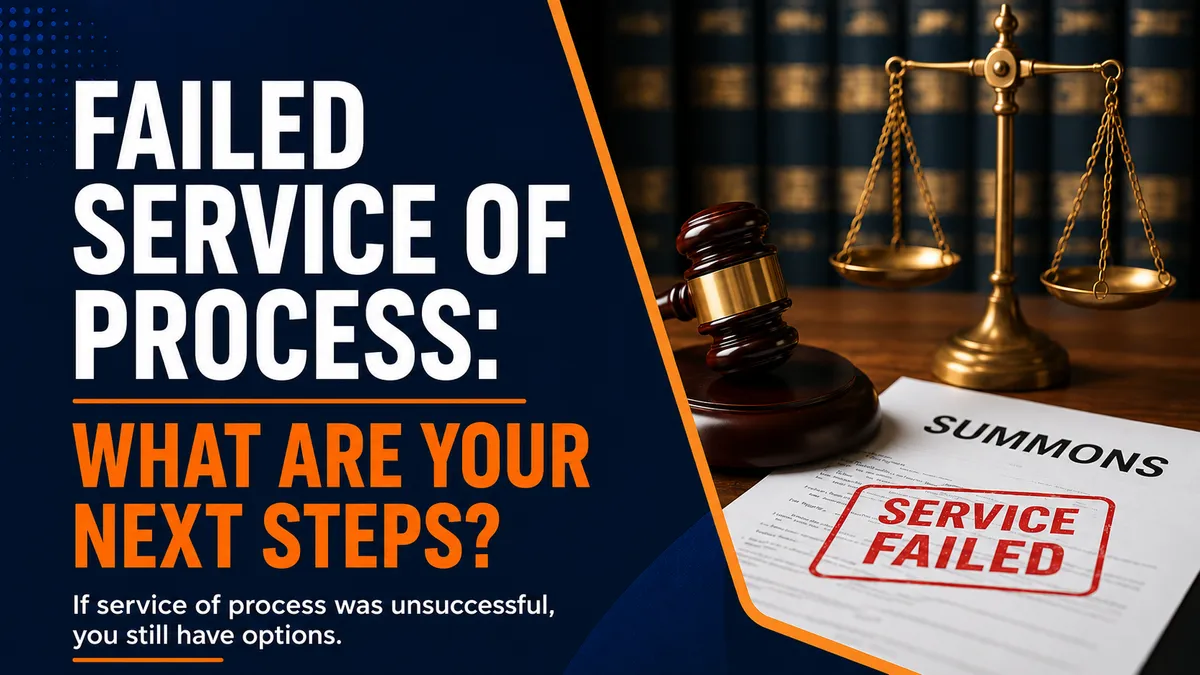
Failed Service of Process: Understanding Your Next Steps
A failed service of process can create delays, increase legal costs, and complicate court proceedings. Whether you are an attorney, law firm, business, or private individual, understanding why service of process failure occurs and knowing the next steps after failed service can help keep your case moving forward.
 process server tips
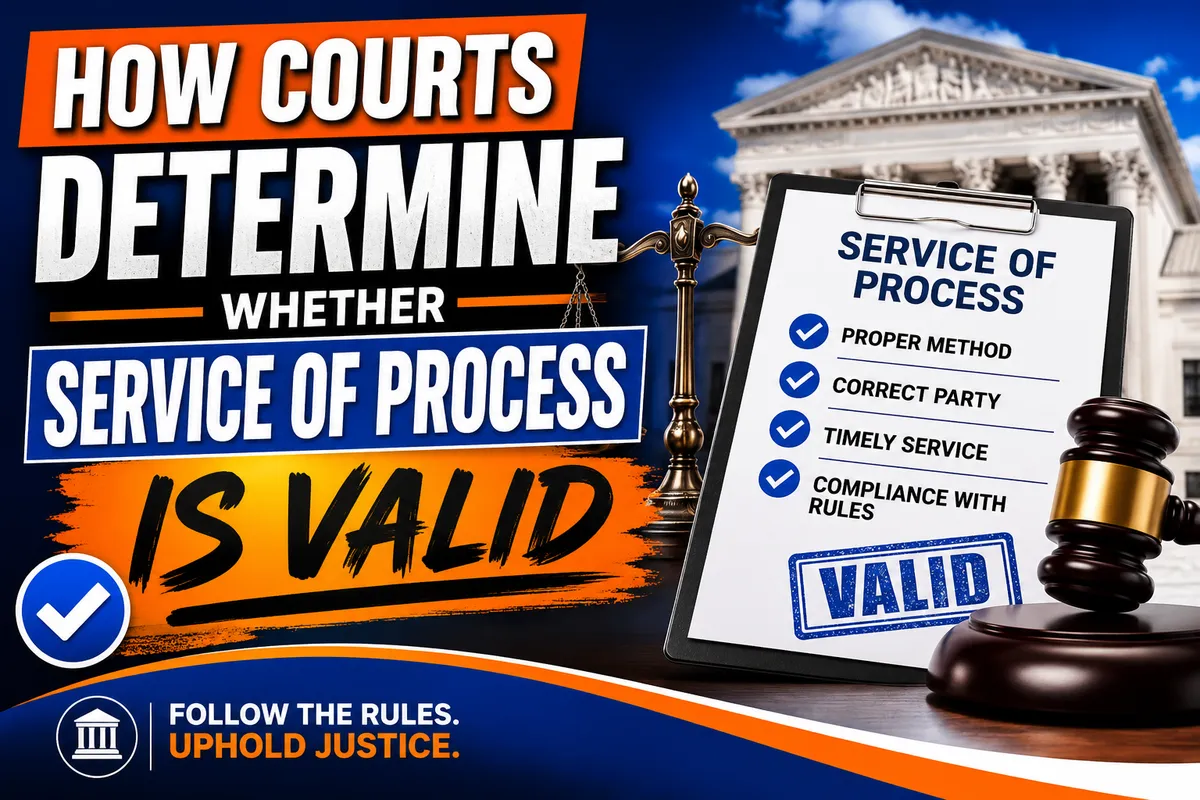
How Courts Determine Whether Service of Process Is Valid | Complete Guide
Learn how courts determine whether service of process is valid, including legal requirements, proof of service, due diligence, and common mistakes that can delay a case.
 process server tips
Ethical Standards Every Professional Process Server Should Follow
Process serving is a critical component of the legal system, ensuring that individuals receive proper notice of legal actions and that due process is protected. Every successful legal proceeding depends on documents being delivered accurately, lawfully, and within required deadlines. This responsibility makes ethical standards for process servers more than just professional expectations. They are essential to maintaining confidence in the justice system.
 process server tips
Due Diligence Requirements for Hard-to-Serve Defendants
Serving legal documents is a critical step in the judicial process. Courts require defendants to receive proper notice of legal actions against them, ensuring fairness and protecting due process rights. However, some individuals are difficult to locate or intentionally avoid service. These hard-to-serve defendants present unique challenges that require process servers to demonstrate thorough due diligence before alternative service methods can be authorized.
Personal Service vs. Substitute Service: What's the Difference?
Proper service of legal documents is one of the most important requirements in any legal proceeding. Courts require parties to receive notice of lawsuits, subpoenas, summonses, complaints, and other legal documents before a case can move forward. Understanding the difference between personal service and substitute service is essential for attorneys, law firms, businesses, and individuals involved in litigation.
 process server tips
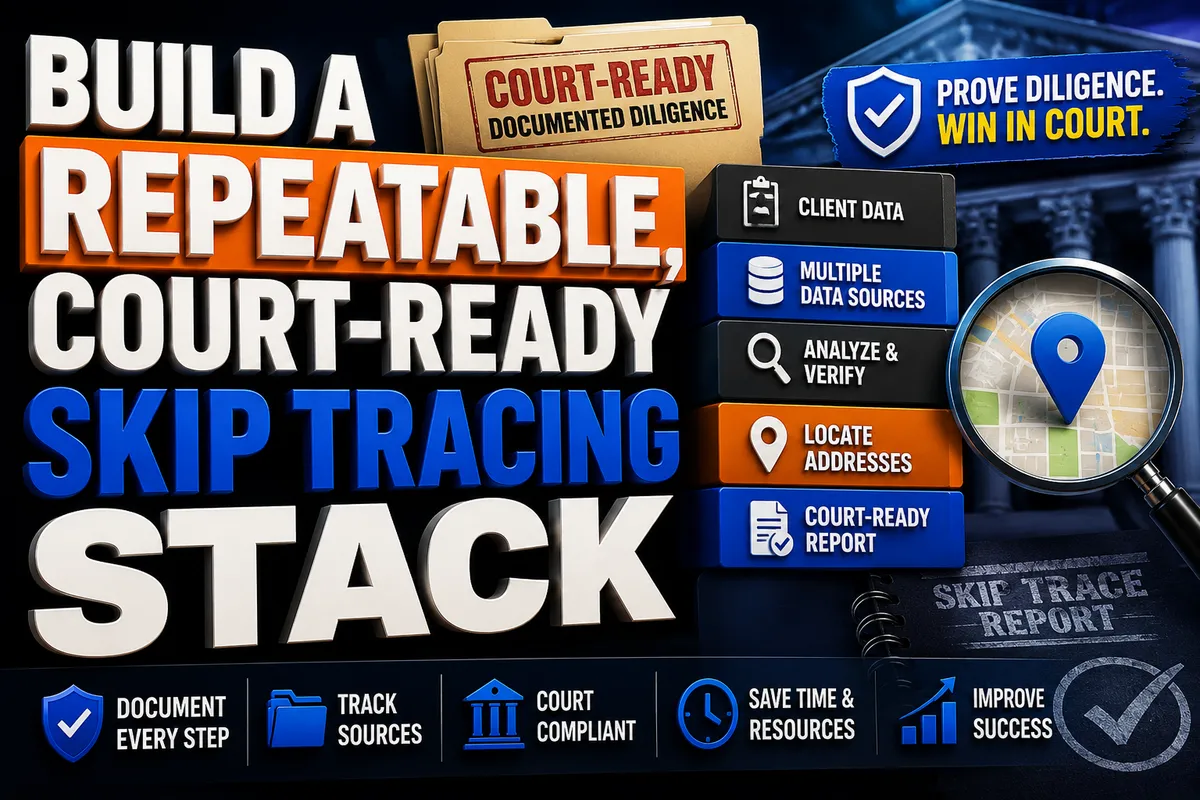
Build a Repeatable, Court-Ready Skip Trace Stack
Skip tracing is becoming more of a process than a database. The modern playbook: stack sources, document each step, and build repeatable searches that stand up in court. Teams that combine OSINT discipline with CRM-style tracking are already outperforming “one-and-done” lookup shops.
 process server tips
Safety Standards in the Age of Viral Service Attempts
Process server safety is trending in two places at once: real-world risk and the “content-ification” of service attempts. A recent viral body-camera style clip centered on impersonation accusations and the legal basics of what constitutes valid service in Utah, reminding operators that professionalism (ID, scripts, de-escalation, and documentation) matters as much as speed. This week’s takeaway: build a written “high-risk address” protocol, standardize check-in/out, and treat cameras as evidence tools, not marketing tools.
 process server tips
The Modern Process Server: Workflow Automation + Local Trust Signals
AI and workflow automation are accelerating across legal operations; process servers that package data cleanly (proof, photos, notes, timestamps, exports) will integrate best with modern client systems. Your growth lever this week: make your Google Business Profile and directory footprint match your operational professionalism.
 process server tips
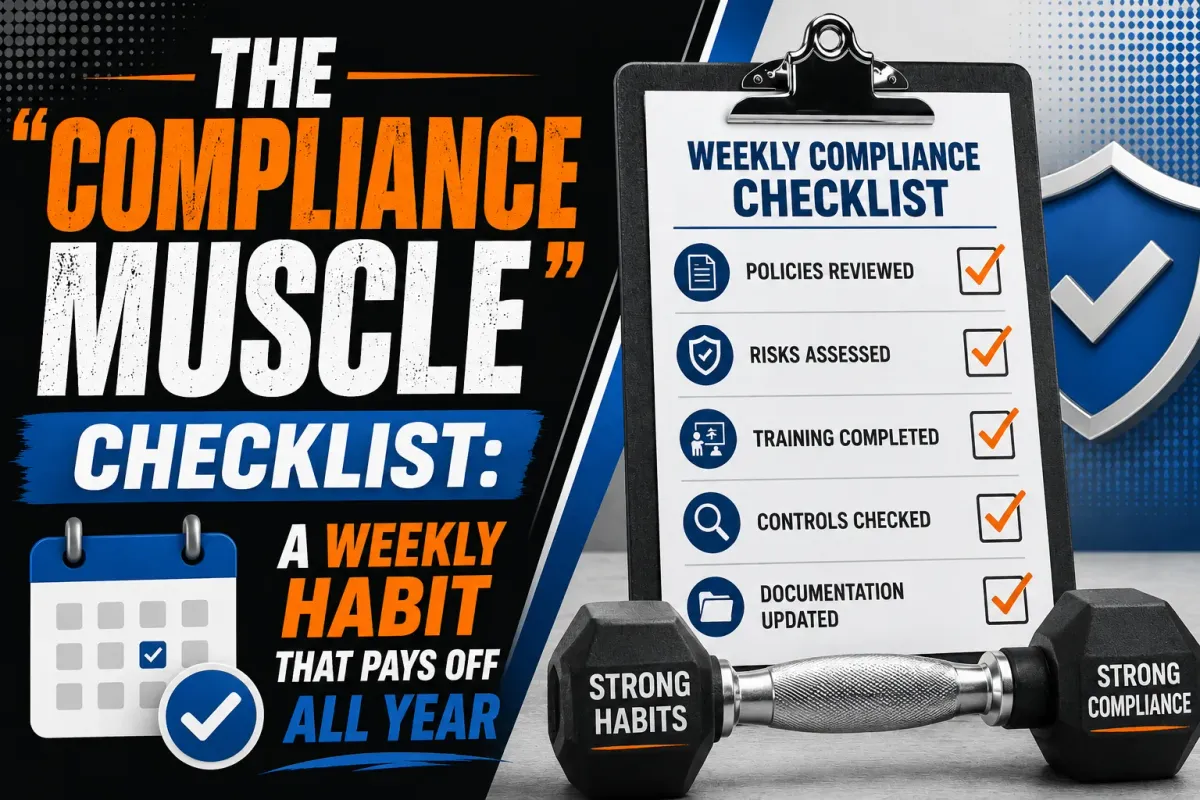
The “Compliance Muscle” Checklist: A Weekly Habit That Pays Off All Year
The Compliance Muscle Checklist is a structured approach that helps legal professionals maintain consistent adherence to process serving regulations, documentation requirements, and internal standards. By incorporating routine reviews into a weekly workflow, process servers can catch issues early, improve record quality, and avoid costly mistakes.
 process server tips
Body Cams, De‑Escalation, and “Pre‑Approach” Planning
We’re revisiting the “safety stack” for process servers—body cams, de-escalation, and pre-approach planning—because the job routinely intersects with high-emotion disputes. This is also a reminder that smart documentation (video + contemporaneous notes) can protect you just as much in court as it does in the field.
 process server tips
Triangulate, Then Verify (A Fast Workflow That Holds Up in Court)
A practical playbook: “triangulate, then verify.” We map an efficient workflow that starts with inexpensive signals (property + utilities + USPS/NCOA equivalents), then escalates to premium tools, then closes with field verification and clean affidavits.
 process server tips
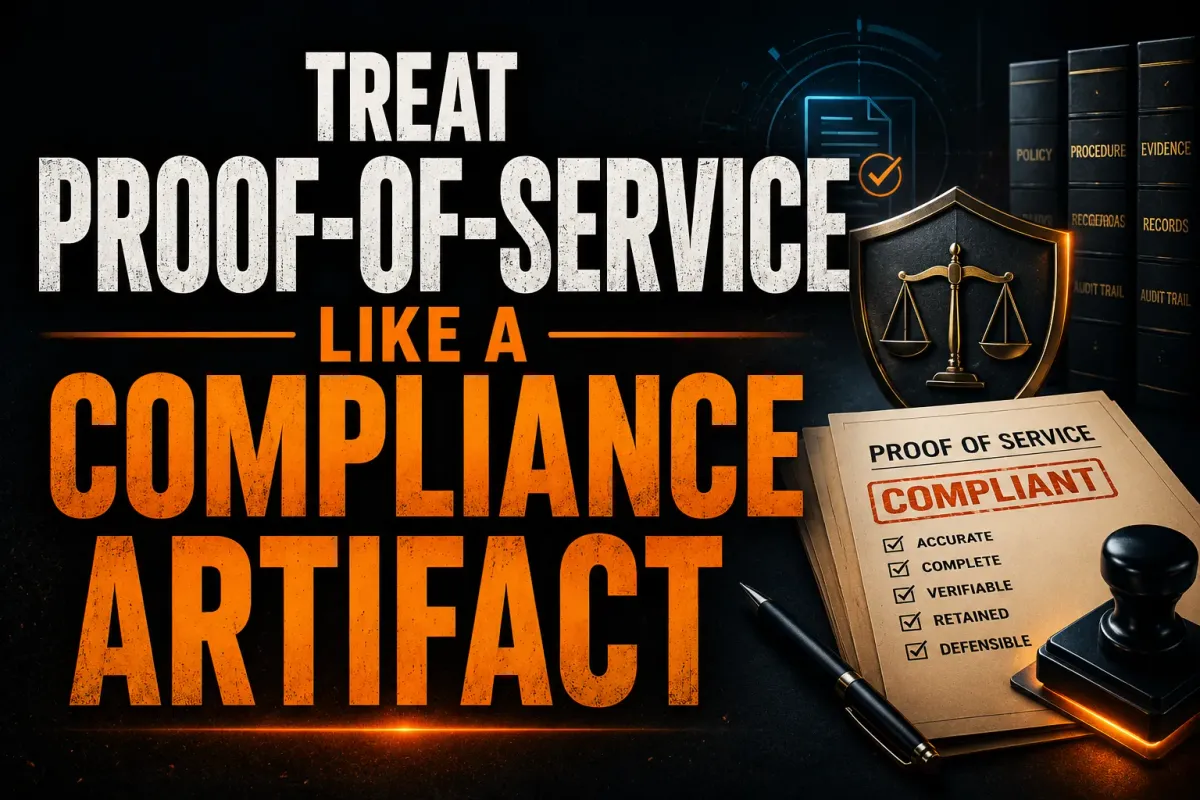
Treat Proof of Service Like a Compliance Artifact
Debt collection litigation keeps colliding with service quality. With Regulation F expectations and heightened state AG activity, collection-facing firms should treat proof-of-service as a compliance artifact—not a formality. We outline operational controls that reduce “sewer service” allegations and protect default judgments.
 process server tips
Local Rule Updates Keep Pushing Courts Toward E‑Service Norms—Here’s What Process Servers Should Watch
Courts are becoming increasingly digital, and process servers need to keep pace. From electronic service and filing systems to digital proof-of-service records, evolving court rules are raising expectations for accuracy, documentation, security, and compliance.
 process server tips
Three Tactics to Increase Hit-Rate Without Burning Hours
Skip tracing is getting faster, but also noisier. We share three tactics to improve hit-rate: building a repeatable “triangulation” workflow, documenting confidence levels, and using “freshness signals” to avoid stale contact data.
 process server tips
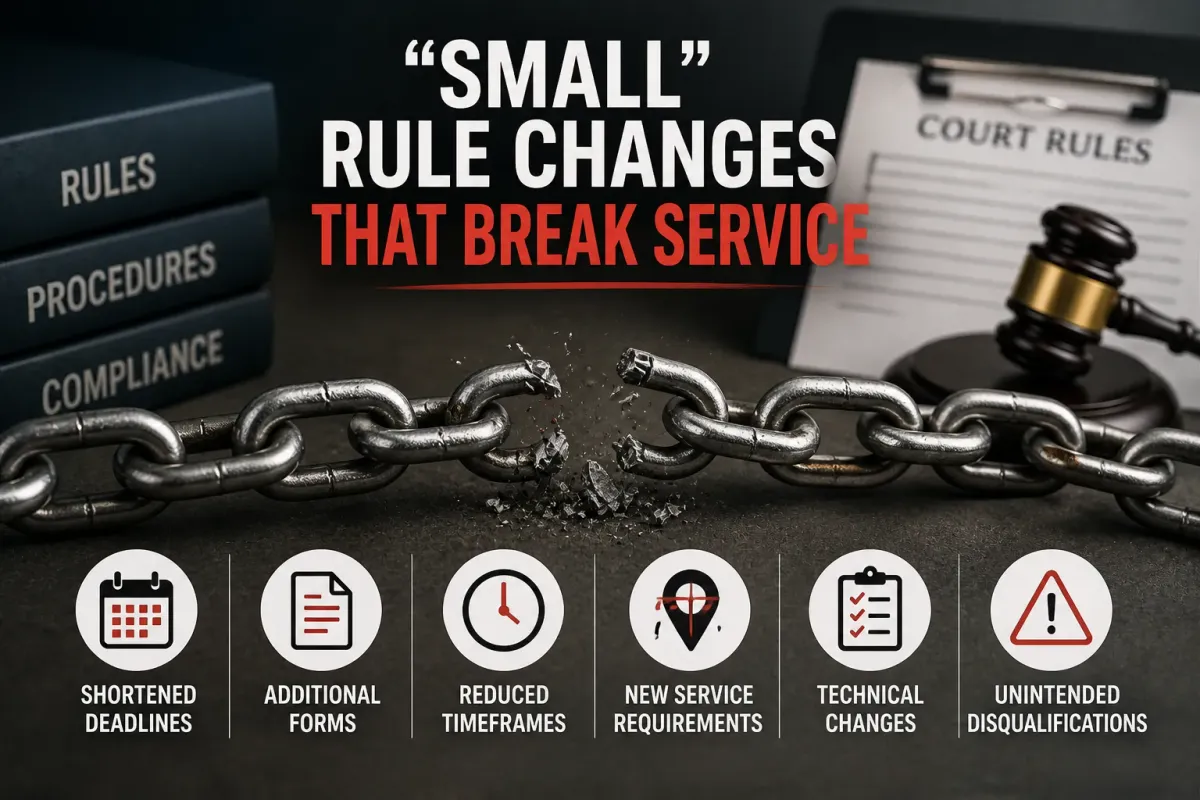
“Small” Rule Changes That Break Service
Service-of-process rules keep shifting at the state level, and “technical” changes can quietly impact your affidavits and success rates. We highlight how recent statutory cleanups and safe-harbor provisions (like Florida’s service-of-process “glitch bill”) can affect substituted service workflows, registered agent hours, and documentation expectations.
 process server tips
Top 5 Skip Tracing Databases for 2026 — Plus Free Techniques That Actually Work
Discover the top 5 skip tracing databases for 2026, including TLOxp, Tracers, Accurint, IRBsearch, and idiCORE. Compare leading tools and learn free skip tracing techniques process servers and investigators can use to locate hard-to-find individuals more efficiently.
 process server tips
Body Cameras Are No Longer Optional: What a Viral Attack Taught the Profession
A body cam video of a process server being attacked went viral March 11 (@divorcerealtormaryj). The footage was used as court evidence. We cover top cameras for 2026, OSHA's new workplace violence standards, and a safety checklist.
Find a Process Server Today
Connect with verified, experienced process servers across all 50 states through our directory.
Browse Directory