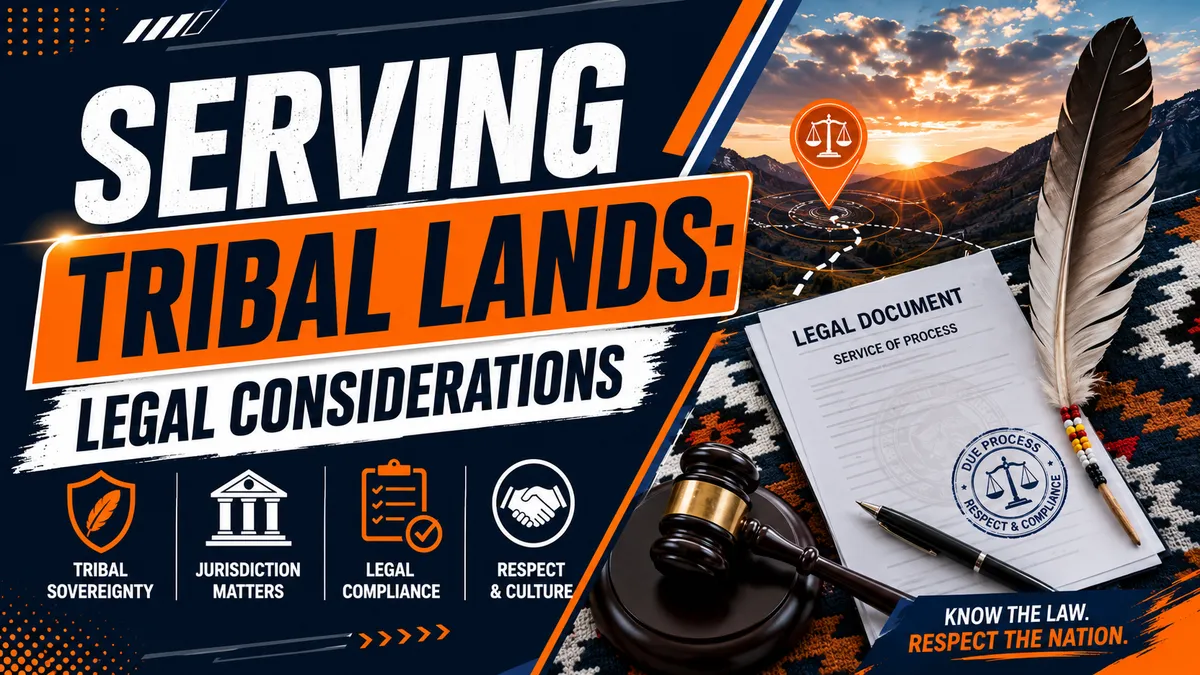
Serving Tribal Lands: Legal Considerations
Introduction
Serving legal documents on tribal lands requires careful planning, a thorough understanding of jurisdiction, and respect for tribal sovereignty. Unlike standard service assignments, serving process on tribal lands often involves navigating tribal, federal, and state laws that may overlap depending on the circumstances of the case. Process servers who fail to understand these legal considerations risk invalid service, delayed court proceedings, and jurisdictional disputes.
For licensed process servers, attorneys, and law firms, understanding the legal framework surrounding tribal lands is essential for completing service professionally and lawfully.
Understanding Tribal Sovereignty
One of the most important concepts in tribal sovereignty and process serving is recognizing that federally recognized Native American tribes are sovereign governments. Tribal nations possess the authority to govern their own affairs, establish courts, enact laws, and administer justice within their jurisdiction.
Although tribal nations exist within the United States, they retain significant governmental authority over their lands and members. This unique legal status affects how service of process may be completed and which court has jurisdiction over a particular legal matter.
Understanding tribal sovereignty is the foundation of every successful tribal land assignment.
Why Jurisdiction Is Critical
Determining jurisdiction is one of the first steps before attempting process server tribal jurisdiction assignments.
Depending on the circumstances, authority may rest with:
Tribal courts
State courts
Federal courts
Concurrent jurisdiction involving more than one legal system
The applicable jurisdiction determines which laws govern service, who may perform service, and whether additional procedures must be followed.
Legal Frameworks Governing Tribal Lands
Several federal laws help define the relationship between tribal governments and the United States while establishing the legal framework for tribal governance.
Examples include:
Indian Reorganization Act
Tribal Law and Order Act
Federal statutes governing tribal jurisdiction
Treaties between tribal nations and the federal government
Individual tribal constitutions and court rules
While these laws establish broad legal principles, each tribal nation may also adopt its own procedures governing tribal law process serving and court operations.
Types of Cases That May Involve Tribal Lands
Process servers may encounter tribal jurisdiction in cases involving:
Civil litigation
Family law
Child custody
Probate
Contract disputes
Property matters
Employment cases
Personal injury claims
Business litigation
Federal court proceedings
Each matter should be evaluated individually because jurisdiction may differ depending on the parties and legal issues involved.
Tribal Court Process Serving
Many tribal nations operate independent court systems with their own rules governing tribal court process serving.
These rules may establish requirements for:
Authorized process servers
Methods of service
Filing proof of service
Deadlines
Court appearances
Service documentation
Because every tribal court may operate differently, process servers should review the applicable tribal rules before attempting service.
Common Challenges on Tribal Lands
Several tribal land process server challenges can complicate assignments.
Jurisdictional Questions
One of the most common jurisdictional challenges tribal lands present is determining which court has authority over the dispute.
This question should be resolved before service is attempted whenever possible.
Limited Access
Some tribal governments regulate entry onto tribal lands.
Process servers may need permission or authorization before entering certain areas or attempting service.
Different Court Procedures
Unlike state courts, tribal courts establish their own procedural rules.
Assuming that state procedures automatically apply can result in invalid service.
Remote Locations
Many reservations cover large geographic areas with limited road access, rural addresses, or incomplete mapping information.
Additional travel time and planning may be required.
Cultural Awareness
Respect for tribal customs, traditions, and governmental authority is essential.
Professional communication and respectful conduct help facilitate successful assignments.
Can Access Be Denied?
Yes.
Tribal governments generally have the authority to regulate access to tribal lands. Depending on tribal policies, a process server may be required to obtain authorization, coordinate with tribal officials, or satisfy other requirements before entering tribal property.
Whenever possible, contacting the appropriate tribal authority before travel can help avoid unnecessary delays.
Best Practices for Serving Tribal Lands
Successful process servers tribal law compliance begins with careful preparation.
Recommended best practices include:
Research the applicable tribal laws.
Determine which court has jurisdiction.
Contact tribal officials when appropriate.
Review tribal court procedures.
Respect tribal customs and policies.
Verify recipient information before travel.
Maintain detailed documentation.
Seek legal guidance if jurisdiction is unclear.
Following these practices helps reduce the risk of improper service.
Documentation Requirements
Accurate records are particularly important during legal service in tribal jurisdictions.
Documentation should include:
Date and time of service
Exact location
Court issuing the documents
Method of service
Identity of the recipient
Communications with tribal officials
Relevant observations regarding the assignment
Complete documentation strengthens the proof of service if challenged.
Common Mistakes to Avoid
Avoid these common errors during serving legal documents tribal lands assignments:
Assuming state law always controls
Ignoring tribal court procedures
Entering tribal lands without authorization when required
Failing to verify jurisdiction
Inadequate documentation
Disregarding tribal customs
Relying on outdated legal information
Careful preparation helps avoid these problems.
Professional Resources
Process servers handling tribal lands legal process assignments can benefit from continuing education and professional resources.
Helpful sources include:
Tribal court administrative offices
Bureau of Indian Affairs
Tribal Law and Policy Institute
National American Indian Court Judges Association
State process server associations
Continuing legal education programs
Remaining informed helps process servers adapt to changing laws and procedures.
Frequently Asked Questions
Can every process server serve documents on tribal lands?
Not necessarily. Some tribal courts establish specific requirements regarding who may perform service or how service must be completed.
Do all tribal nations follow the same procedures?
No. Every federally recognized tribe may establish its own court rules and service requirements.
Why is jurisdiction important?
Jurisdiction determines which court has legal authority over the matter and which service procedures must be followed.
Should tribal authorities be contacted before service?
In many situations, contacting the appropriate tribal office or court beforehand helps clarify applicable requirements and avoid unnecessary complications.
What happens if service is improper?
Improper service may result in invalid service, delayed litigation, additional legal expenses, or other procedural consequences depending on the applicable court and jurisdiction.
How Mighty Process Server Can Help
Mighty Process Server understands the legal complexities involved in tribal jurisdiction legal service and assignments occurring on tribal lands. Our experienced professionals carefully evaluate jurisdictional requirements, review applicable court procedures, and coordinate assignments in accordance with governing laws and professional standards.
Whether handling civil litigation, probate, family law matters, or other legal considerations tribal lands assignments, our commitment to professionalism, accuracy, and compliance helps attorneys and law firms complete service efficiently while respecting tribal sovereignty.
Conclusion
Successfully serving legal documents on tribal lands requires more than locating the recipient. It requires understanding tribal sovereignty, identifying the correct jurisdiction, complying with tribal court procedures, and respecting the authority of tribal governments. Because each tribal nation may establish its own rules governing service of process, careful research and preparation are essential before attempting service.
By understanding serving process on tribal lands, following tribal law process serving requirements, and maintaining complete documentation, process servers can perform assignments professionally while protecting due process and respecting the sovereignty of Native American tribal nations.
Stay sharp. Stay informed. Live Mighty!
Read the full article at www.mightyprocessserver.com
This article is published by Process Server Daily, powered by MightyAutomation.ai, the leader in legal support intelligence.