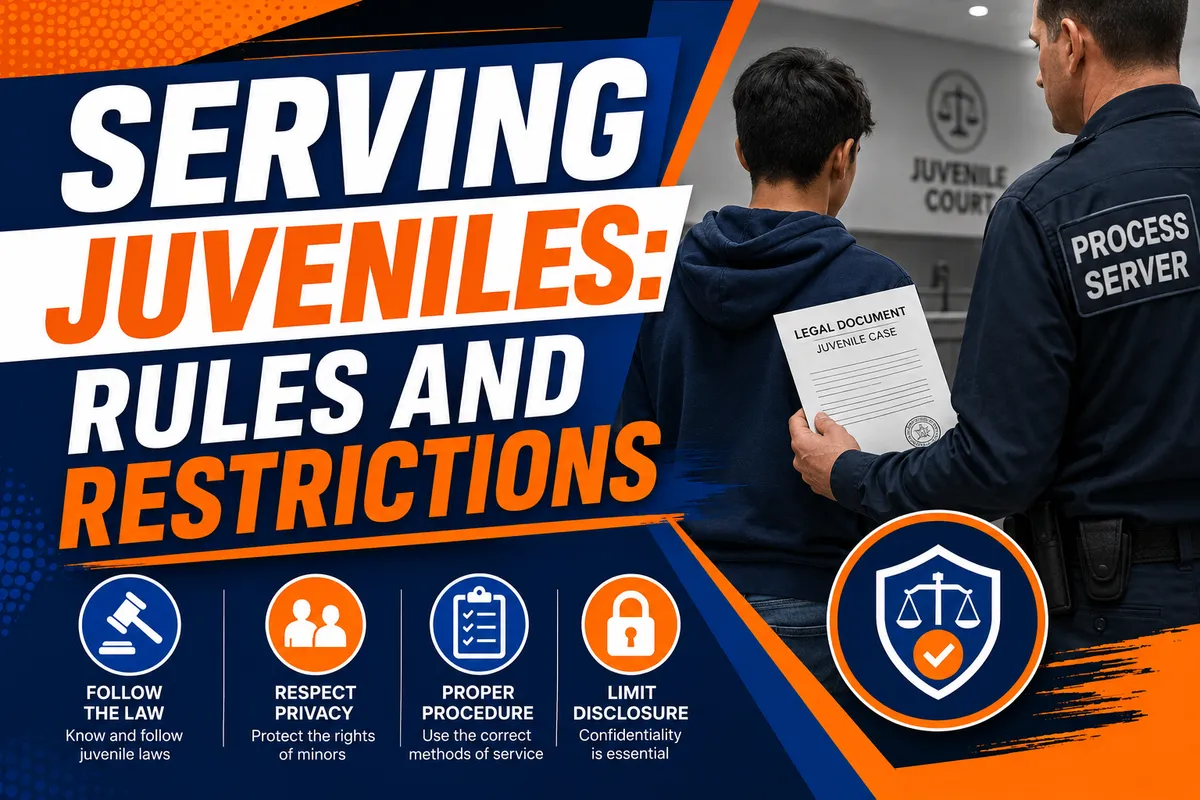
Serving Juveniles: Rules and Restrictions
Introduction
Serving legal documents involving minors requires a thorough understanding of the law, careful attention to detail, and strict compliance with court procedures. Unlike adults, juveniles often receive additional legal protections that affect how service of process must be completed. For licensed process servers, attorneys, and law firms, understanding the requirements for serving juveniles process server assignments is essential to protecting due process and avoiding unnecessary delays.
Whether the matter involves family law, probate, civil litigation, or juvenile court proceedings, following the proper procedures helps ensure that legal documents delivery to juveniles is completed in accordance with applicable law.
The Role of a Process Server
A process server is responsible for delivering legal documents to the appropriate parties so they receive notice of legal proceedings. Proper service allows courts to move forward while protecting every individual's right to due process.
When handling juvenile service of process, the responsibilities of the process server become more specialized because minors often cannot legally accept service on their own. Understanding the applicable process server juvenile rules is critical to completing service correctly.
Why Serving Juveniles Is Different
Unlike adults, juveniles are generally considered to have limited legal capacity. Because of this, courts often require that legal documents be served on a parent, legal guardian, conservator, guardian ad litem, or another person authorized by law to act on behalf of the minor.
These additional protections help:
Protect the legal rights of minors
Ensure responsible adults receive notice
Promote fair legal proceedings
Preserve due process
Reduce disputes over improper service
The exact procedures depend on the jurisdiction and the type of legal action.
Types of Cases Involving Juveniles
Process servers may encounter minors in cases involving:
Child custody
Divorce
Guardianship
Adoption
Probate
Personal injury
Civil litigation
Juvenile court matters
Protective orders
Education-related litigation
Each type of case may involve different serving minors legal considerations.
Legal Requirements for Serving Minors
The requirements governing legal service minors differ by state and local court rules.
Depending on the jurisdiction, service may require delivery to:
A parent
A legal guardian
A guardian ad litem
A court-appointed representative
Another adult authorized by law
Some jurisdictions also require service upon both the juvenile and the responsible adult. Process servers should always review the applicable statutes and court rules before attempting service.
State Laws Serving Minors
Every jurisdiction establishes its own state laws serving minors, making it essential to verify local requirements before beginning an assignment.
For example, some states require service on a parent or guardian, while others specify additional requirements depending on the age of the juvenile or the type of legal proceeding. Local court rules may also establish unique procedures for juvenile court process serving.
Because these laws frequently differ, process servers should never assume that the rules in one state apply elsewhere.
Who Can Accept Service for a Minor?
In many situations, the juvenile cannot legally accept service alone.
Depending on applicable law, legal documents may be accepted by:
Parent
Legal guardian
Court-appointed guardian
Guardian ad litem
Conservator
Another adult authorized by statute or court order
Understanding these process server minor restrictions helps ensure valid service.
Challenges When Serving Juveniles
Process servers frequently encounter unique challenges during juvenile legal service process assignments.
Locating the Appropriate Adult
The juvenile's residence may differ from the residence of the parent or guardian because of shared custody, foster care, or guardianship arrangements.
Determining Legal Authority
The adult present may not always have legal authority to accept service on behalf of the juvenile.
Emotional Circumstances
Cases involving minors often involve emotionally sensitive family situations requiring professionalism and discretion.
Confidential Proceedings
Many juvenile matters are confidential.
Process servers should avoid discussing case information with unauthorized individuals.
Different Court Requirements
Procedures may vary based on:
Type of case
Age of the juvenile
Local court rules
State statutes
Careful preparation helps avoid mistakes.
Best Practices for Serving Juveniles
Following juvenile process service best practices improves both compliance and professionalism.
Recommended practices include:
Review the court documents carefully.
Verify applicable state laws.
Confirm the identity of the responsible adult.
Document each service attempt completely.
Protect confidential information.
Maintain professional communication.
Consult legal counsel when unusual situations arise.
Follow all local court procedures.
These practices reduce errors and improve the likelihood of successful service.
Common Mistakes to Avoid
Many service issues result from avoidable mistakes.
Common errors include:
Assuming adult service rules apply to minors
Serving only the juvenile when additional service is required
Failing to verify guardianship
Ignoring local court procedures
Inadequate documentation
Discussing confidential juvenile matters
Attempting service without understanding applicable laws
Avoiding these mistakes helps reduce the risk of invalid service.
Consequences of Improper Service
The improper service minors consequences can be significant.
Possible outcomes include:
Service declared invalid
Delayed hearings
Court-ordered reservice
Increased legal costs
Postponed litigation
Potential disciplinary consequences where applicable
Proper compliance protects both the legal process and the rights of the juvenile.
Juvenile Process Server Resources
Process servers handling juvenile matters should continually update their knowledge.
Helpful juvenile process server resources include:
State statutes
Local court rules
Continuing education courses
Professional process server associations
Legal publications
Court administrative offices
Attorney guidance on complex assignments
Ongoing education helps process servers remain current as laws and procedures evolve.
Frequently Asked Questions
Can a juvenile accept legal documents?
The answer depends on the jurisdiction and the type of legal proceeding. In many cases, service must also be made upon a parent, guardian, or another legally authorized adult.
Are juvenile cases confidential?
Many juvenile proceedings involve confidentiality protections that limit the disclosure of information.
Do all states follow the same rules?
No. Minor process serving laws vary significantly by jurisdiction, making local research essential.
Why is documentation important?
Detailed documentation helps demonstrate that service complied with applicable statutes and court rules.
Can schools accept service for a student?
School policies and state laws vary. Process servers should verify whether service at a school is permitted and whether additional authorization is required.
How Mighty Process Server Can Help
Mighty Process Server understands the complexities of serving legal documents to minors and the importance of complying with applicable laws. Our experienced professionals carefully review assignment requirements, verify service procedures, and document every step of the process to help ensure valid and professional service.
Whether handling family law matters, guardianship proceedings, civil litigation, or juvenile court process serving, our commitment to professionalism, accuracy, and compliance helps attorneys and law firms complete assignments efficiently while protecting the legal rights of minors.
Conclusion
Serving juveniles requires greater care than many standard service assignments because minors receive additional legal protections under the law. Understanding process serving children legalities, following applicable process server juvenile guidelines, and complying with jurisdiction-specific procedures are essential for successful service. By remaining informed, documenting every assignment thoroughly, and respecting the unique legal requirements surrounding juvenile matters, process servers can complete juvenile service of process professionally while protecting due process and supporting the integrity of the legal system.
Stay sharp. Stay informed. Live Mighty!
Read the full article at www.mightyprocessserver.com
This article is published by Process Server Daily, powered by MightyAutomation.ai, the leader in legal support intelligence.