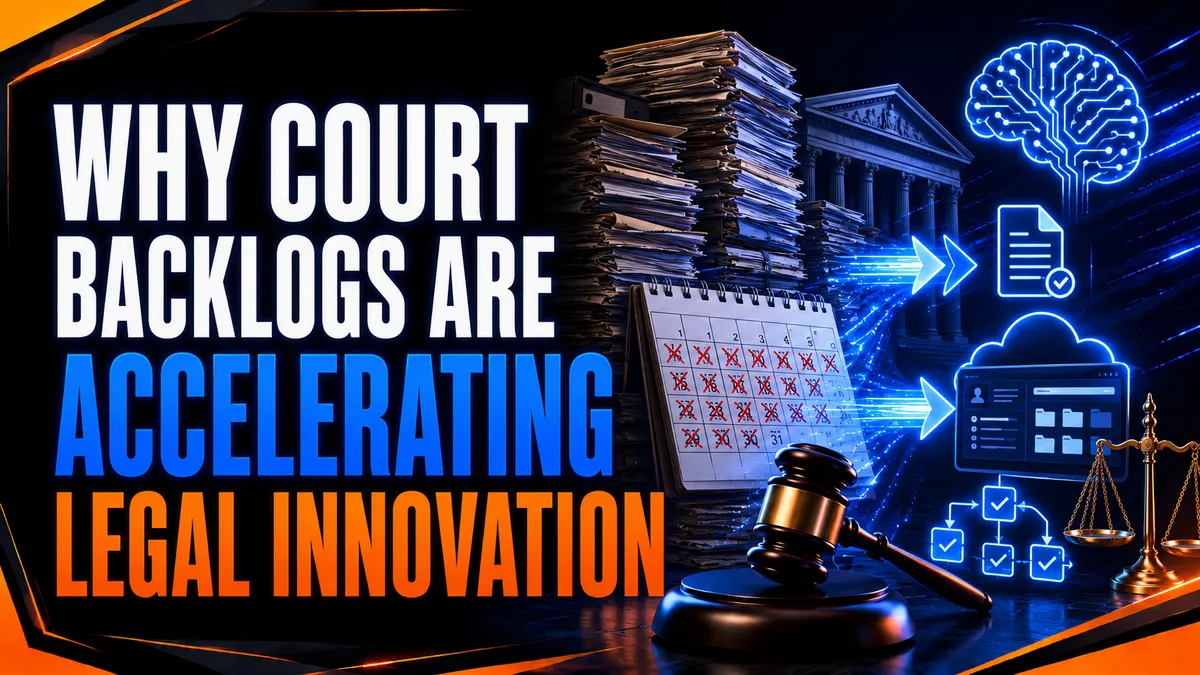
Why Court Backlogs Are Accelerating Legal Innovation
Ask anybody who files cases for a living how long things take these days and you'll probably get a sigh before you get an answer. Cases that used to wrap up in months now drag on for a year or more. Hearings get bumped. Calendars are packed. Fees keep climbing while everybody waits.
For regular people, that wait isn't just annoying. It can leave a job, a home, a custody arrangement, or even someone's freedom hanging in the air. For businesses, a stalled case ties up money, makes planning almost impossible, and can turn a win into something that barely feels like one by the time it finally shows up.
I've been in the process serving business a long time, and I've watched this from the field side. When the courts slow down, everybody downstream feels it. But I've also noticed something else. The pressure is forcing the whole legal world to get smarter about how work gets done. Courts, attorneys, paralegals, process servers, and public agencies are all rethinking old habits. Backlogs are pushing legal innovation forward faster than good intentions ever did.
Let's talk about why that's happening, what's actually changing, and where process servers fit into the picture.
What a Court Backlog Really Is
A backlog happens when cases come in faster than the system can finish them. It's that simple. Every court has a limited number of judges, clerks, courtrooms, and hours in the day. When the pile of active cases grows bigger than that capacity, cases stack up and wait their turn.
There's rarely one single cause. It's usually a mix of things, like:
More filings coming in than the court planned for
Open judge seats that take a long time to fill
Tight budgets and not enough staff
Rules and procedures that add steps without adding much value
Old technology that slows down simple tasks
Disruptions that force hearings to be postponed and rescheduled
Here's the thing people miss. Small problems add up fast in a court system. A five minute delay on one file doesn't sound like much. Multiply it across thousands of cases going through the same clerk's office and you've got a real traffic jam.
Who Gets Hurt When Courts Slow Down
Everybody involved pays a price.
Plaintiffs wait longer to be made whole. Defendants live with a cloud over their heads. Families stay stuck in disputes they want to put behind them. Businesses can't plan because they don't know how a case will turn out or when. Attorneys juggle deadlines that keep moving. Court staff try to keep up with dockets that never seem to shrink.
And there's an uglier side to it. Delay isn't equal. A party with deep pockets can afford to sit and wait out a long case. Somebody with fewer resources might take a bad settlement just because they can't afford to keep going. When that happens, the outcome isn't really about who's right. It's about who can hold out the longest.
That's why I don't think of court case management as just a paperwork problem. It's an access to justice problem. If people can't get a timely answer, the system isn't working the way it's supposed to.
Why Pressure Leads to New Ideas
A lot of the traditional court process was built around paper files, in-person appearances, manual data entry, and one approval after another. That worked fine when volumes were lower. It doesn't scale well.
The obvious fix is more judges and more staff, and that's still important. But hiring, funding, and training all take time. Courtrooms only hold so many people. You can't just snap your fingers and double capacity.
So courts and legal organizations are starting to ask better questions:
Which tasks actually need a judge's attention?
Which hearings really need everyone in the same room?
Which notices could go out automatically?
Which disputes could be settled before they ever get near a trial?
The answers to those questions are shaping new ways of running courts. Some of it is changing procedure. Some of it is new legal technology. The best results usually come from both working together.
One thing I want to be clear about. The goal isn't just to go faster. Fast and wrong is worse than slow and right. The good innovations cut out friction while still protecting fairness, transparency, and everyone's right to be heard.
The Innovations Helping Cases Move Forward
E-Filing and Digital Case Management
Electronic filing is one of the most common changes you'll see. Instead of driving to the courthouse or mailing a stack of paper, attorneys and other authorized users submit pleadings, motions, exhibits, and other documents online. Less paper, less travel, and records that are a whole lot easier for court staff to find and organize.
E-filing also heads off some of the dumb delays that used to eat up time. Many systems check a filing before it goes into the review queue and flag things like missing information, the wrong format, or an unpaid fee. You find out right away instead of weeks later when a clerk kicks it back. Every filing gets a digital timestamp, so there's no argument about when something came in. And electronic notices let the parties know about new activity so they can respond quickly.
It gets even better when e-filing connects to a case tracking system. Now you can see deadlines, hearings, filing history, service status, and what's still pending all in one place. Court administrators can spot cases that have stalled, spread work out more evenly, and measure how long cases are really taking.
That's more than turning paper into PDFs. It's taking information that used to be scattered across desks, drawers, and inboxes and putting it where people can actually use it.
If you've ever filed in a court that still runs mostly on paper and then filed in one with a solid electronic system, you know the difference. One feels like you're mailing a letter into the void. The other feels like you know exactly where your case stands.
Automation and Artificial Intelligence
A huge amount of legal work is repetitive. Sending routine notices. Routing documents to the right person. Reminding people about deadlines. Scheduling. Confirming payments. Sending status updates. None of that needs a law degree, but all of it takes time.
Legal process automation handles a lot of those tasks so people don't have to. When it's set up carefully, staff get to spend their time on the work that really needs a human, like judgment calls, tough conversations, and specialized knowledge.
Artificial intelligence takes that a step further. AI tools can help sort documents, summarize long records, transcribe proceedings, translate information, assist with legal research, and flag cases that might need attention sooner. Data tools can also help administrators see patterns in filings and decide where to put their limited resources.
But I'm going to be straight with you here, because this matters. AI makes mistakes. It can sound confident and still be wrong. Automated systems can also repeat bias that was baked into the data or the design. So courts and legal organizations need real guardrails:
Protect confidential and personal information
Be open about how important tools are being used
Test systems to make sure they don't treat groups of people unfairly
Keep a real human in the loop on anything that affects someone's rights
Technology should help judges, attorneys, and staff do their jobs. It should never be the one making decisions about people's lives without anybody checking its work.
Online Dispute Resolution and Virtual Hearings
Not every dispute needs to go down the same long road. Online dispute resolution gives people a structured way to share information, negotiate, or go through mediation before a case eats up valuable courtroom time. It tends to work well for things like certain small claims, consumer disputes, simple debt matters, and other high-volume cases where the facts are fairly clear and the remedies are limited.
Virtual hearings help too. Status conferences, procedural motions, and short administrative appearances can often be handled remotely when local rules allow it. That saves travel time, makes calendars more flexible, and makes it easier for people to show up when they're dealing with work, health issues, transportation problems, mobility limits, or kids at home.
That said, remote isn't right for everything. Complex trials, cases where credibility is the whole ballgame, urgent protective orders, and situations with a big power imbalance between the parties may need to happen in person or need extra protections.
And courts have to remember that not everybody has a good internet connection or a laptop. If you modernize without offering accessible technology, language help, disability accommodations, and offline options, you've just traded one barrier for another. That's not progress.
Where Process Servers Fit In
This is the part I care about most, because it's where I've spent my career.
Process servers sit right between a case being filed and a case actually moving forward. A case can't properly proceed until the people involved get lawful notice. That's the whole point of service of process. It's due process in action.
And when service goes sideways, the court feels it. A bad address, a string of failed attempts, inaccurate records, or a late proof of service can mean a postponed hearing and wasted court time. Every one of those reschedules takes a slot that another case could have used. Multiply that across a busy county and service problems become part of the backlog.
Tools That Improve Service and Documentation
Good process servers can help fix that, and modern tools make a big difference:
Mobile dispatch so jobs get to the right server quickly
GPS-supported attempt records that show where and when each attempt happened
Timestamped field notes that document what the server saw
Secure access to documents so nothing gets lost or exposed
Address verification tools that cut down on wasted trips
Electronic proof of service so the affidavit gets back faster
All of that creates cleaner documentation for attorneys and the court. Real-time updates also mean a legal team finds out about a service problem while there's still time to do something about it, not the day before a deadline.
Why Field Experience Still Matters
Now, I'll say this as loud as I can. Technology doesn't replace a good process server. Successful service still takes knowing the rules where you're serving, paying attention in the field, correctly identifying the person, respecting privacy, and writing an accurate affidavit. The apps help. The experience is what gets it done right. The real value comes from putting field know-how together with reliable digital records.
For law firms, working with process servers who use these tools means better visibility into case status and less risk that a service issue blows up the schedule. That's legal innovation happening at one of the most important points in the whole process.
It's also a big reason we built Mighty Process Server the way we did. Legal professionals need a fast way to find a qualified server in the right area, and servers need a way to show their work clearly. When both sides can see what's happening, cases keep moving.
Software Alone Won't Fix It
Here's a hard truth. Buying a shiny new platform won't clear a backlog by itself. If staff aren't trained, if systems can't talk to each other, if the rules still require the same redundant steps, or if the software is confusing to use, you've just spent a lot of money to stay stuck.
Modernization works when people, procedures, and technology all move together. The smart approach looks something like this:
Map out how a case moves from filing to resolution.
Find the spots where cases keep getting stuck.
Pick tools that solve those specific problems, not just tools that look impressive.
Test them with the people who will actually use them.
Measure the results and adjust.
Useful things to measure include processing time, filing errors, missed appearances, how accessible the system is for the public, and how consistent the results are.
Security belongs on that list too. Legal platforms hold sensitive information, and they need strong access controls, secure backups, audit trails, oversight of outside vendors, and a plan for what happens when something goes wrong. A court system that gets faster but leaks private data hasn't really improved.
What It Means for Attorneys, Clients, and Courts
When it's done right, everybody comes out ahead.
Attorneys
Attorneys spend less time on repetitive tasks, manage deadlines more easily, and get a clearer view of where their cases stand. Smoother workflows can support more predictable pricing and quicker communication with clients. Less time chasing status updates means more time on advocacy, negotiation, and strategy, which is what clients are paying for anyway.
Clients
Clients benefit when the process costs less and feels less mysterious. Being able to see documents, case status, and upcoming dates online makes it easier to understand what's going on. And resolving disputes earlier can help people reach a practical outcome before the cost of fighting gets bigger than the thing they're fighting over.
Courts
Courts get to focus their limited resources on the cases that really need a judge. Better data shows where the bottlenecks are, helps with staffing decisions, and lets court leaders see whether a change is actually working or just sounds good on paper.
Where This Is All Heading
The next wave of legal innovation will probably bring more connected platforms, smarter workflow tools, secure digital identity checks, and better use of data for planning. Some organizations are even looking at blockchain-based verification for certain records and transactions.
Some of that will pan out. Some of it won't. Every new tool should be judged by what problem it actually solves, what evidence shows it works, and what protections come with it. New isn't the same as better.
And no single app is going to make court delays disappear. Real, lasting improvement takes a lot of pieces working together:
Enough funding for the courts
Enough judges and staff
Practical procedural rules
Solid alternative dispute resolution options
Responsible automation with human oversight
Dependable service of process
Innovation is at its best when it makes those basics stronger, not when it distracts from them.
Moving Forward, One Serve at a Time
Court backlogs have shown everyone the limits of a legal system that was built for a slower, less connected time. That's frustrating. But it's also a turning point.
If the legal community keeps picking smart, practical improvements and holds every new tool to a high standard for fairness, security, and accessibility, we can end up with a system that resolves disputes better and serves people more reliably.
And from where I sit, in the field with the papers in hand, I can tell you that every faster, cleaner, better-documented serve is one small way to help get there. When service gets done right the first time, the case keeps moving. That's how we all chip away at the backlog, one serve at a time.
Find a Qualified Process Server
If you need a qualified process server who knows the local rules and keeps you in the loop, you can find one in any state on the Mighty Process Server directory.
Stay sharp. Stay informed. Live Mighty!
Read the full article at www.mightyprocessserver.com
This article is published by Process Server Daily, powered by MightyAutomation.ai, the leader in legal support intelligence.